
DbcultAccessing Vault...
Director's Spotlight
Senior Film Conservator
Director's Spotlight: United States
A Deep Dive into the 1919 Vision of Henry Otto
Analyzing Some Bride (1919) requires a deep dive into the unique directorial voice that Henry Otto brought to the screen. By challenging the status quo of 1919 cinema, it continues to spark endless debates among critics and cinephiles alike.
In Some Bride, Henry Otto pushes the boundaries of conventional narrative. The film's unique approach to its subject matter has sparked endless debates and interpretations among cinephiles and critics alike.
In this work, Henry Otto explores the intersection of cult and United States cultural identity. The meticulous attention to detail suggests a deep-seated commitment to pushing the boundaries of the medium, ensuring that Some Bride remains a relevant topic of study for cult enthusiasts.
| Cinematography | Static |
| Soundtrack | Orchestral |
| Editing | Slow-Burn |
| Art Direction | Brutalist |
Visualizing the convergence of Henry Otto's style and the core cult narrative.
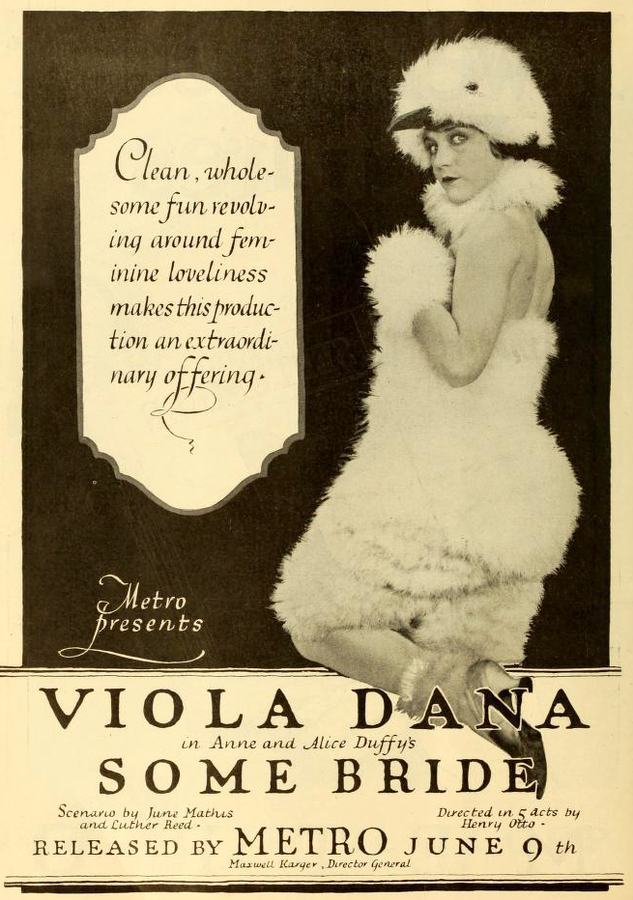
Young bride Patricia Morley's flirtatious ways at a summer resort keep her husband Henry in a state of continual anxiety. At an old-fashioned barn dance, Patricia enacts the role of a chicken breaking out of an egg, and Henry's wrath explodes. After accusing her of being in love with another man, Henry returns to New York and files for divorce. Heartbroken, Patricia sends her friend Victoria French to tell Henry that she is dying. Meanwhile, Patricia goes to a hospital and alarms the staff with her hysterical conduct. Later the nurse discovers that Patricia is bluffing. Henry arrives at the hospital just in time to see Patricia pretending to be nurse to his divorce lawyer, Geoffrey Patten, whose leg is broken. Henry's anger explodes again, but he makes up with Patricia and they go home together. Henry hires the hospital nurse as a detective, causing more complications, but Henry finally is cured of his jealousy.
Decades after its release, Some Bride remains a vital piece of the cinematic puzzle. Its influence can be seen in countless modern works, solidifying Henry Otto's status as a master of the craft in United States and beyond.