
DbcultAccessing Vault...
Director's Spotlight
Senior Film Conservator
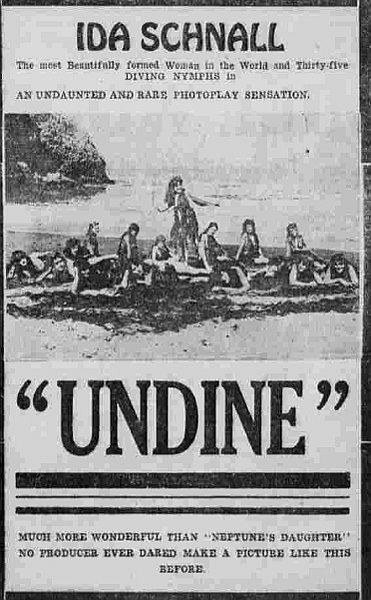
Director's Spotlight: United States
A Deep Dive into the 1916 Vision of Henry Otto
The artistic breakthrough represented by Undine in 1916 highlights the uncompromising vision of Henry Otto that defines this cult masterpiece. In the context of United States's rich cinematic history, it captures a specific kind of cinematic magic that is rarely replicated.
In Undine, Henry Otto pushes the boundaries of conventional narrative. The film's unique approach to its subject matter has sparked endless debates and interpretations among cinephiles and critics alike.
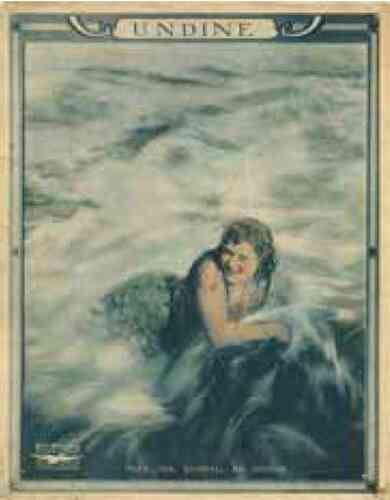
While deeply rooted in United States, Undine has achieved a global reach, influencing directors from various backgrounds. Its ability to translate cult tropes into a universal cinematic language is why it remains a cult staple decades after its 1916 release.
| Cinematography | Static |
| Soundtrack | Minimalist |
| Editing | Slow-Burn |
| Art Direction | Brutalist |
Visualizing the convergence of Henry Otto's style and the core cult narrative.
The story begins in the realm of Queen Unda, mistress of the under-seas, surrounded by her nymphs, sylphs and mermaids, who disport themselves on the sands and in the waters of the deep. Berthelda, daughter of a fisherman and his devoted wife, has been stolen by the mermaids one day when the child is playing on the sands. Queen Unda rules that little Berthelda shall be left to roam in the Enchanted Forest, because her parents have taken fishes from the ocean, greatly to the annoyance of Unda and Neptune. Undine's mother has committed sin with a mortal and to atone for this her little baby, Undine, is taken to the shore near the fisherman's cottage, to be discovered by the fisherman and his wife. It is Undine's mission on earth to marry a mortal, and thus atone for the sins committed by her mother in loving a handsome young huntsman, whose untimely death likewise robs Undine's mother of her own life. Undine is welcomed by the fisherman and his wife, who consider she has been sent by the gods to take the place of their little Berthelda. Fifteen years pass. Berthelda has been adopted by the Duke and Duchess and among those who pay her court at the Castle is Huldbrand, the bravest of knights. To test his love, Berthelda sends Huldbrand into the Enchanted Forest and bids him return with proof that he had explored its wonders. Coming to the fisherman's cottage, Huldbrand meets Undine, immediately falls in love with her and they are married by a shipwrecked priest, whom Undine has rescued from the sea. Going with his bride to the Castle, there is great rejoicing. At the celebration in honor of Huldbrand's marriage there appears a messenger from Queen Unda who tells Undine her earthly mission is fulfilled and she returns to the waters under the sea. Huldbrand is reconciled to Lady Berthelda and the story ends.
Decades after its release, Undine remains a vital piece of the cinematic puzzle. Its influence can be seen in countless modern works, solidifying Henry Otto's status as a master of the craft in United States and beyond.