
DbcultAccessing Vault...
Director's Spotlight
Senior Film Conservator
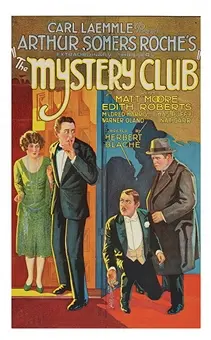
Director's Spotlight: United States
A Deep Dive into the 1926 Vision of Herbert Blaché
Analyzing The Mystery Club (1926) requires a deep dive into the defining moment in Mystery history that Herbert Blaché helped create. Defining a new era of United States artistic expression, it transcends regional boundaries to tell a universal story.
In The Mystery Club, Herbert Blaché pushes the boundaries of conventional narrative. The film's unique approach to its subject matter has sparked endless debates and interpretations among cinephiles and critics alike.
While deeply rooted in United States, The Mystery Club has achieved a global reach, influencing directors from various backgrounds. Its ability to translate Mystery tropes into a universal cinematic language is why it remains a cult staple decades after its 1926 release.
| Cinematography | Deep Focus |
| Soundtrack | Diegetic |
| Editing | Rhythmic |
| Art Direction | Naturalist |
Visualizing the convergence of Herbert Blaché's style and the core Mystery narrative.
The Mystery Club, an organization of millionaires, draws up an agreement at the instigation of Cranahan, wagering that crimes can be committed without detection by the police; Inspector Burke serves as arbiter. A forfeiture of $25,000 is set, and the members draw secret lots to decide who is to be the criminal. When Burke himself is reported murdered, the members agree to cancel the agreement but cannot find the document. The jewels of Mrs. Vanderveer are also missing, and in their place she finds a note implicating the club and causing the members to suspect one another. Nancy telephones club member Dick Bernard, her sweetheart, that the jewels will be returned for a fee, which Dick delivers to her in a low dive; subsequently, a kidnapping and forgery charge is laid at the club's door. Cranahan finally explains that he has schemed to get the club members interested in criminology, and thus relieved of their "crimes" they gladly contribute to an institute for criminal reform.
Decades after its release, The Mystery Club remains a vital piece of the cinematic puzzle. Its influence can be seen in countless modern works, solidifying Herbert Blaché's status as a master of the craft in United States and beyond.