
DbcultAccessing Vault...
Director's Spotlight
Senior Film Conservator
Director's Spotlight: United States
A Deep Dive into the 1917 Vision of Herbert Blaché
The artistic breakthrough represented by The Peddler in 1917 highlights the philosophical inquiries that Herbert Blaché embeds within the narrative. Framed by the hauntingly beautiful landscapes of the production, it leaves an indelible mark on the soul of the viewer.
In The Peddler, Herbert Blaché pushes the boundaries of conventional narrative. The film's unique approach to its subject matter has sparked endless debates and interpretations among cinephiles and critics alike.
In this work, Herbert Blaché explores the intersection of cult and United States cultural identity. The meticulous attention to detail suggests a deep-seated commitment to pushing the boundaries of the medium, ensuring that The Peddler remains a relevant topic of study for cult enthusiasts.
| Cinematography | Noir-Inspired |
| Soundtrack | Synth-Heavy |
| Editing | Disjunctive |
| Art Direction | Baroque |
Visualizing the convergence of Herbert Blaché's style and the core cult narrative.
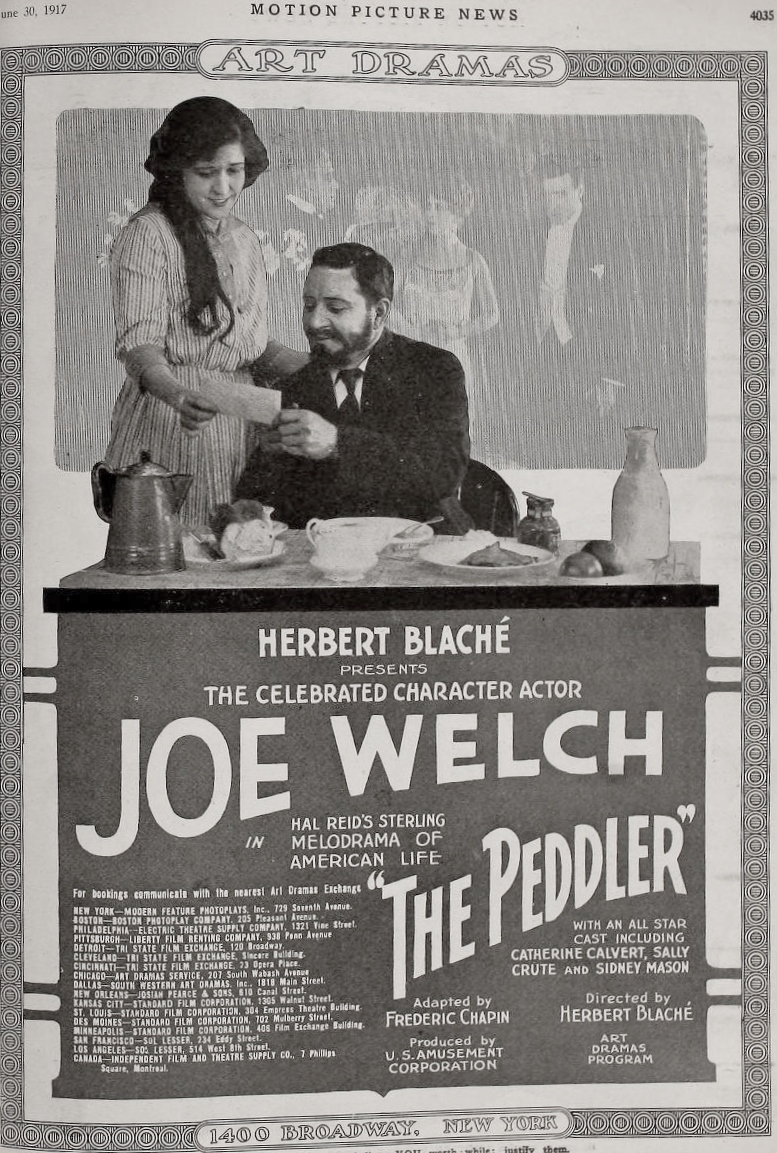
Abraham Jacobs, an itinerant Jewish country peddler, saves his pennies until he can afford to open a small second-hand clothing store. Unfortunately, Abraham's son Sonny has not inherited his father's decent, hard working instincts, and when his mistress, Mrs. Morgan, is in need of money, Sammy robs Abraham's safe and then disappears. Time passes, and oil is discovered on a tract of land left to Abraham by his late wife. Although he can now afford to live in comfort with his adopted daughter Mary, Abraham still strongly feels the loss of his son. His life is finally made complete when Sammy returns repentant to marry Abraham's housekeeper Sarah, and the old peddler, his struggles now over, is able to spend the rest of his days surrounded by his family.
Decades after its release, The Peddler remains a vital piece of the cinematic puzzle. Its influence can be seen in countless modern works, solidifying Herbert Blaché's status as a master of the craft in United States and beyond.