
DbcultAccessing Vault...
Director's Spotlight
Senior Film Conservator
Director's Spotlight: United States
A Deep Dive into the 1915 Vision of Herbert Brenon
Few works in United States cinema carry the same weight as The Two Orphans, especially regarding the cultural zeitgeist captured so perfectly by Herbert Brenon in 1915. Utilizing a 1915-specific aesthetic that remains timeless, it serves as a blueprint for future generations of cult directors.
In The Two Orphans, Herbert Brenon pushes the boundaries of conventional narrative. The film's unique approach to its subject matter has sparked endless debates and interpretations among cinephiles and critics alike.
While deeply rooted in United States, The Two Orphans has achieved a global reach, influencing directors from various backgrounds. Its ability to translate cult tropes into a universal cinematic language is why it remains a cult staple decades after its 1915 release.
| Cinematography | Deep Focus |
| Soundtrack | Experimental |
| Editing | Elliptical |
| Art Direction | Expressionist |
Visualizing the convergence of Herbert Brenon's style and the core cult narrative.
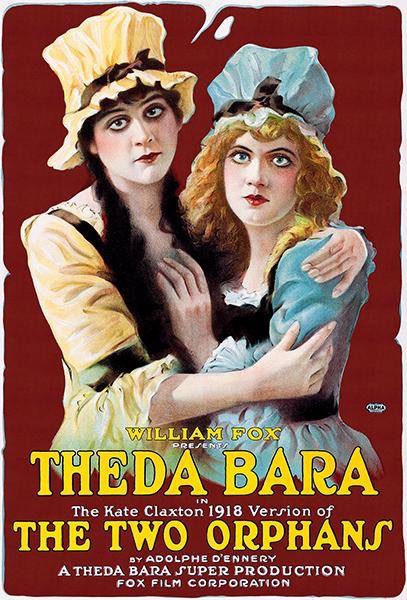
In Paris, the beautiful orphan Henriette is kidnapped by the Marquis de Presles, a libertine, leaving her blind and defenseless friend Louise wandering the streets alone. While Mother Frochard, a beggar and thief, forces Louise to beg for her food, Henriette is rescued by the Chevalier de Vaudrey, who loves her. The chevalier's mother, the Countess De Liniere, discovers that Louise is her long-lost daughter and resolves to find her. In the meantime, Mother Frochard's son, a hunchback named Pierre, falls in love with Louise, and when his brother Jacques cruelly beats the girl, Pierre kills him. Just then, the countess locates Louise, and after the girl regains her sight, she is joined with Pierre. The countess then gives her consent to the marriage of her son and Henriette.
Decades after its release, The Two Orphans remains a vital piece of the cinematic puzzle. Its influence can be seen in countless modern works, solidifying Herbert Brenon's status as a master of the craft in United States and beyond.