
DbcultAccessing Vault...
Director's Spotlight
Senior Film Conservator
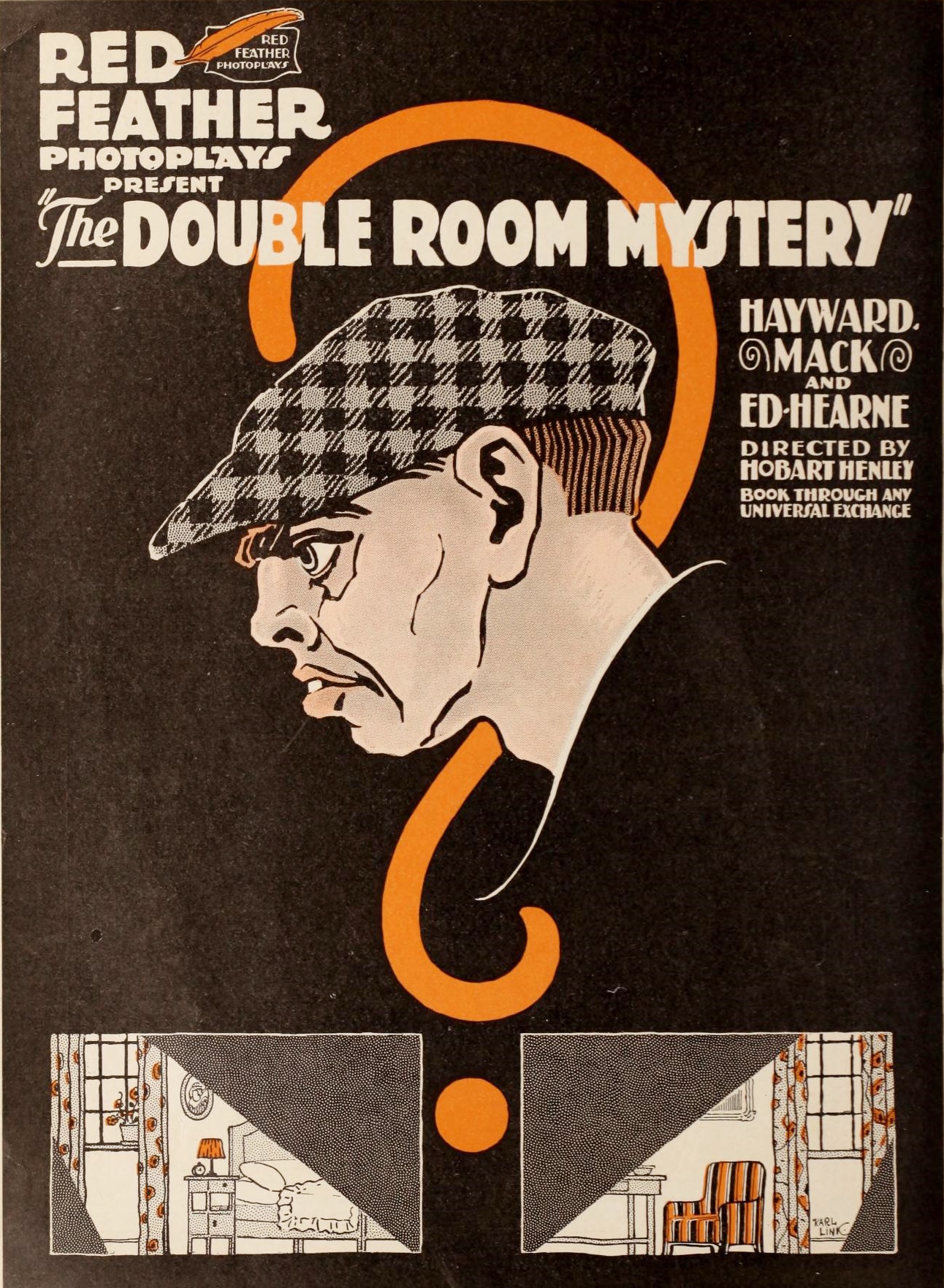
Director's Spotlight: United States
A Deep Dive into the 1917 Vision of Hobart Henley
The brilliance of The Double Room Mystery (1917) is inseparable from a monumental shift in cult filmmaking spearheaded by Hobart Henley. Occupying a unique space between cult and pure art, it serves as a blueprint for future generations of cult directors.
In The Double Room Mystery, Hobart Henley pushes the boundaries of conventional narrative. The film's unique approach to its subject matter has sparked endless debates and interpretations among cinephiles and critics alike.
To fully appreciate The Double Room Mystery, one must consider the cinematic climate of 1917. During this period, United States was undergoing significant artistic shifts, and Hobart Henley was at the forefront of this cult movement, often challenging established norms.
| Cinematography | High-Contrast |
| Soundtrack | Minimalist |
| Editing | Disjunctive |
| Art Direction | Baroque |
Visualizing the convergence of Hobart Henley's style and the core cult narrative.
Morris, a hardened criminal, is imprisoned for larceny and has engaged William Newman, a police court lawyer, to defend him. As recompense, Morris gives Newman his vest in which are sewed four valuable diamonds. Newman is attracted by a girl who slaves for the proprietress of his boarding house. Georgianna, who is afraid of Newman, is arrested for the theft of several cheap rings belonging to the proprietress, which have been mislaid. While in prison Newman promises to pay her bail, if she is willing to meet his advances. Newman cuts the diamonds from the vest, as he is determined to get away with all instead of one, according to the agreement. The new hole in the vest is discovered, and Morris is brought before the chief. The two are left alone and Morris hits the chief and disappears through the window. Georgianna's case is dismissed, but she thinks Newman is responsible for her being set free. On arriving at his rooms a fierce struggle ensues. A knock is heard and she is told to hide behind the couch. Morris enters the room and shoots Newman, who falls dead. Georgianna is held for the murder, Morris having escaped into the room adjoining Newman's, in which McHugh, a newspaper reporter, is dressing. Willy, a roustabout in the boarding-house, and an admirer of Georgianna's, becomes suspicious. He stacks furniture and looks through the transom when the furniture falls with a clamor. Morris is terrified and is about to draw his revolver when McHugh hits him with a bottle and then handcuffs him. Leaving Willy to guard the captive, he dashes to the police station and to his office to write up his scoop. Meantime, Bennett, another reporter, arrives and looking over the transom sees Morris still handcuffed and Willy guarding him. He phones for help, and is disappointed because of not being the first to get the story. McHugh feeling sorry for them sends Willy and Georgianna, who has been set free to live with an uncle of his.
Decades after its release, The Double Room Mystery remains a vital piece of the cinematic puzzle. Its influence can be seen in countless modern works, solidifying Hobart Henley's status as a master of the craft in United States and beyond.