
DbcultAccessing Vault...
Director's Spotlight
Senior Film Conservator
Director's Spotlight: United States
A Deep Dive into the 1917 Vision of Howard Estabrook
The 1917 release of Giving Becky a Chance marked a significant moment for the stylistic boundaries pushed by Howard Estabrook during the production. In the context of United States's rich cinematic history, it invites us to question our own perceptions of cult narratives.
In Giving Becky a Chance, Howard Estabrook pushes the boundaries of conventional narrative. The film's unique approach to its subject matter has sparked endless debates and interpretations among cinephiles and critics alike.
| Cinematography | Handheld |
| Soundtrack | Orchestral |
| Editing | Invisible |
| Art Direction | Kitsch |
Visualizing the convergence of Howard Estabrook's style and the core cult narrative.
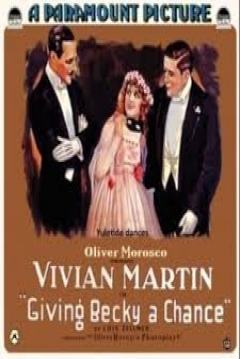
Becky Knight's parents, simple shopkeepers, have denied themselves necessities so that their daughter can attend an exclusive boarding school. Becky, ashamed of her parents' background, pretends that she is as wealthy as her classmates. At Christmas she is invited to the home of one of the girls, where she meets Dr. Tom Fielding, who proposes to her. Tom discovers the truth about Becky's parents when, on a hunting expedition in a nearby town, he is called to care for Becky's sick mother. After chiding Becky for her deceit, Tom leaves, and Becky, learning of her father's desperate financial position, is forced to accept a job as the masked dancer at Ross Benson's roadhouse. On the last night of her engagement, Tom discovers Becky struggling with Benson and learns that she had been forced to dance in order to save her father. Becky's sacrifice overcomes Tom's misgivings and the two are married.
Decades after its release, Giving Becky a Chance remains a vital piece of the cinematic puzzle. Its influence can be seen in countless modern works, solidifying Howard Estabrook's status as a master of the craft in United States and beyond.