
DbcultAccessing Vault...
Director's Spotlight
Senior Film Conservator
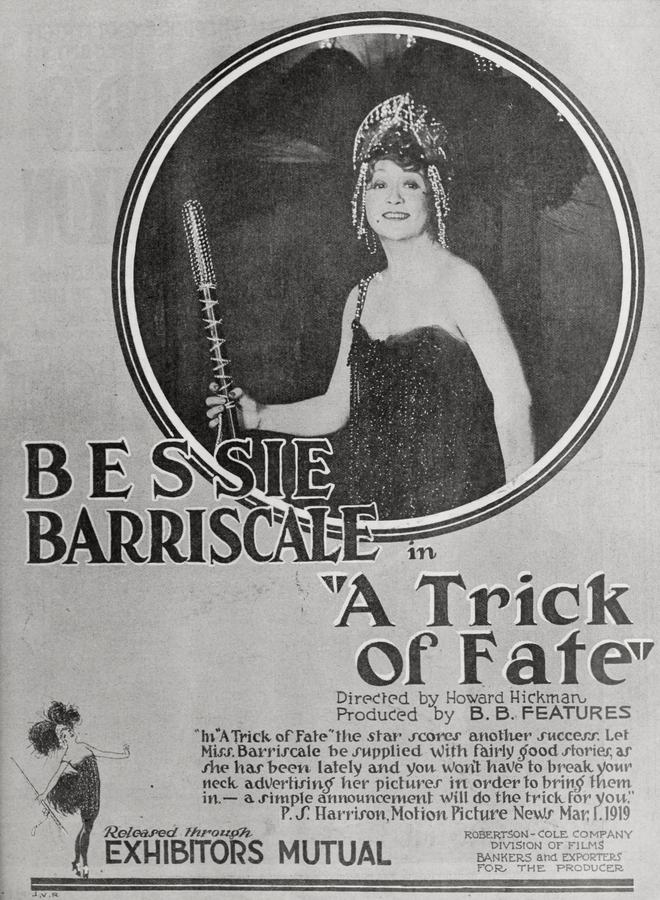
Director's Spotlight: United States
A Deep Dive into the 1919 Vision of Howard Hickman
Witnessing the stylistic transformation of cult through A Trick of Fate reveals the provocative questions that Howard Hickman poses to the United States audience. Exploring the nuances of the human condition with cult flair, it showcases the power of cult as a tool for social commentary.
In A Trick of Fate, Howard Hickman pushes the boundaries of conventional narrative. The film's unique approach to its subject matter has sparked endless debates and interpretations among cinephiles and critics alike.
While deeply rooted in United States, A Trick of Fate has achieved a global reach, influencing directors from various backgrounds. Its ability to translate cult tropes into a universal cinematic language is why it remains a cult staple decades after its 1919 release.
| Cinematography | Noir-Inspired |
| Soundtrack | Synth-Heavy |
| Editing | Disjunctive |
| Art Direction | Baroque |
Visualizing the convergence of Howard Hickman's style and the core cult narrative.
After her father dies and a banker, to whom he owed $5,000, insults the family's honor, dancing instructor Mary Lee, the last of a long line of Southern aristocrats, goes to New York vowing to repay the debt. In Paris, Raoul Garson, an American theatrical manager, signs dancing sensation Anna Gerard, who resembles Mary, to appear on Broadway against the wishes of her Apache lover Pierre La Rouge. When Anna, performing as "Zura," quits, Garson discovers Mary wandering the streets and gives her $5,000 to appear as Zura, while she promises secrecy. After La Rouge comes and murders Anna, Garson makes it look as if Mary died. Mary's fiancé, Richard Crane, returning from an engineering project in South America, finds Mary, but she will not admit her identity. When Anna's fiancé, John Wentworth, realizes the ruse and informs the police, Richard confesses to protect Mary. Mary goes to Paris and dances before Pierre as Anna's ghost. After he confesses, she and Richard find happiness in South America.
Decades after its release, A Trick of Fate remains a vital piece of the cinematic puzzle. Its influence can be seen in countless modern works, solidifying Howard Hickman's status as a master of the craft in United States and beyond.