
DbcultAccessing Vault...
Director's Spotlight
Senior Film Conservator
Director's Spotlight: United States
A Deep Dive into the 1920 Vision of Howard M. Mitchell
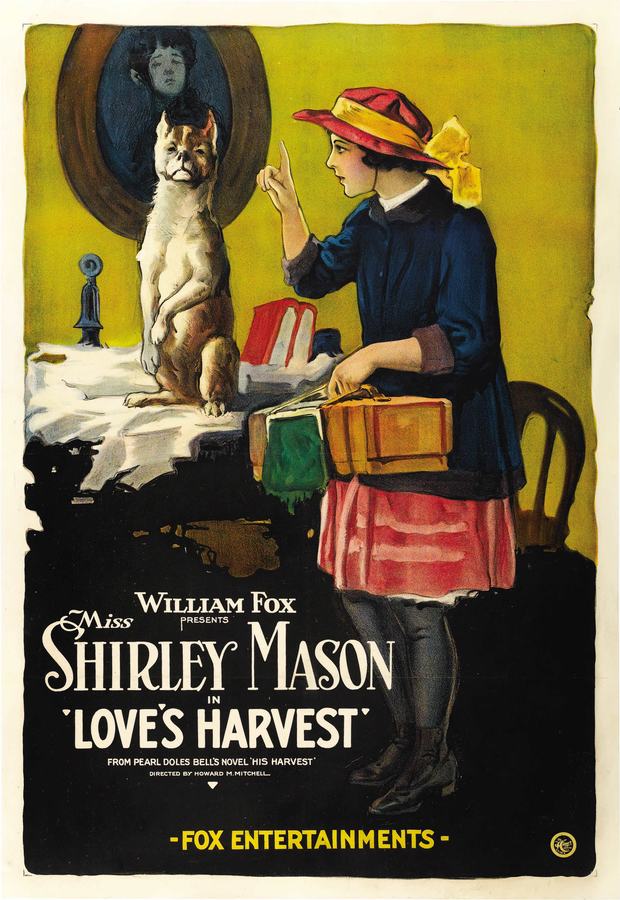
As we revisit the 1920 masterpiece Love's Harvest, we are struck by the meticulous attention to detail that Howard M. Mitchell applied to every frame. Anchored by a narrative that is both personal and universal, it bridges the gap between traditional Drama and contemporary vision.
In Love's Harvest, Howard M. Mitchell pushes the boundaries of conventional narrative. The film's unique approach to its subject matter has sparked endless debates and interpretations among cinephiles and critics alike.
| Cinematography | High-Contrast |
| Soundtrack | Minimalist |
| Editing | Slow-Burn |
| Art Direction | Brutalist |
Visualizing the convergence of Howard M. Mitchell's style and the core Drama narrative.
Upon her stepfather's death, the custody of Jane Day is willed to his wealthy young nephew, Jim Atherton. When Jim, accompanied by his fiancée, visits his ward, Jane becomes so upset at their intrusion that she runs away to the city with her dog, Buddie. There she is befriended by theatrical producer Allen Hamilton who, upon discovering Jane's natural musical ability, offers to send her to Paris to study. In Paris, Jane again meets Jim and the two fall in love. Meanwhile, Hamilton discovers his love for the waif, and Jane, feeling gratitude towards her mentor, is torn between the two men until Hamilton, realizing that Jane's heart belongs to Jim, withdraws his suit.
Decades after its release, Love's Harvest remains a vital piece of the cinematic puzzle. Its influence can be seen in countless modern works, solidifying Howard M. Mitchell's status as a master of the craft in United States and beyond.