
DbcultAccessing Vault...
Director's Spotlight
Senior Film Conservator
Director's Spotlight: United States
A Deep Dive into the 1915 Vision of Hugh Ford
When we examine the cinematic landscape of United States, Sold emerges as a landmark work of the enduring legacy of Hugh Ford's artistic contribution to the genre. Through a lens of existential fatalism and cult tropes, it captures a specific kind of cinematic magic that is rarely replicated.
In Sold, Hugh Ford pushes the boundaries of conventional narrative. The film's unique approach to its subject matter has sparked endless debates and interpretations among cinephiles and critics alike.
To fully appreciate Sold, one must consider the cinematic climate of 1915. During this period, United States was undergoing significant artistic shifts, and Hugh Ford was at the forefront of this cult movement, often challenging established norms.
| Cinematography | Noir-Inspired |
| Soundtrack | Orchestral |
| Editing | Invisible |
| Art Direction | Kitsch |
Visualizing the convergence of Hugh Ford's style and the core cult narrative.
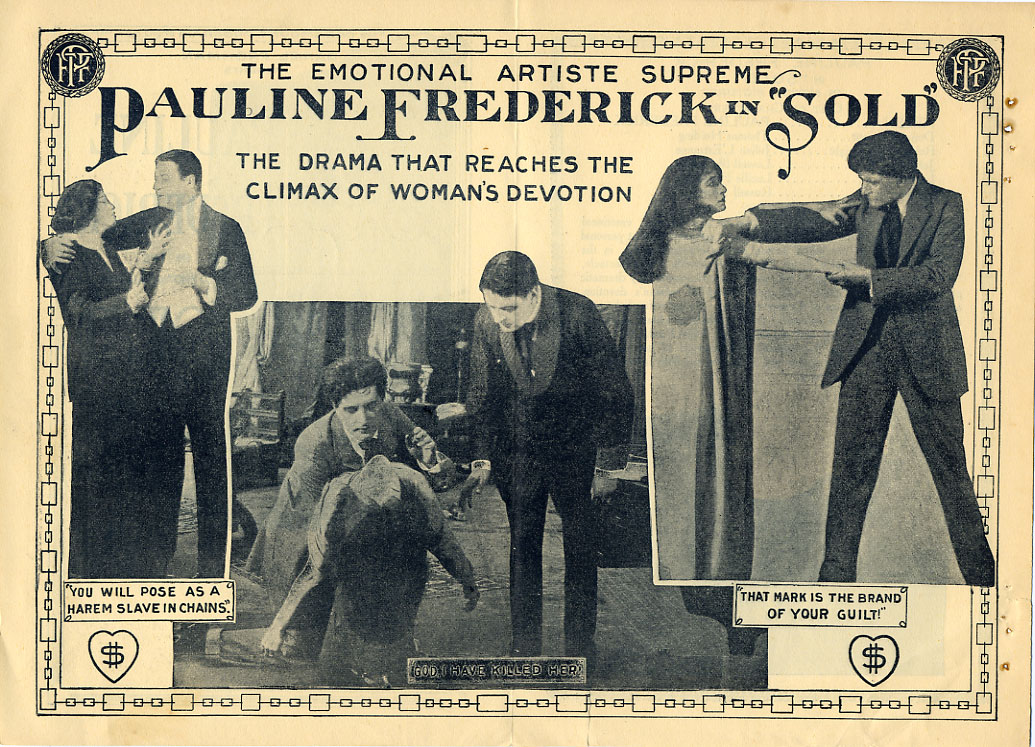
The story is of two artists, one a success and the other, although with far greater ability, lacks the funds with which to make the connections that contribute toward success. Both love the same woman, who selects the poor artist as her husband. Through a long period of stress and financial difficulties she emerges with the determination to aid her husband financially. On a visit from the rich artist to their home, he admires a painting of her husband's for which she had posed in the nude. The rich artist explains that he requires just such a model for the completion of a painting upon which he has been at work, "The Harem Market," and that he would be willing to pay thousands of dollars for her services. Later, the wife, in order to obtain the money with which to assist her husband, visits the rich artist, tells him she was her husband's model, and that she will accept his offer. In time, the husband learns of her act, and entirely misunderstanding her motive, denounces her as a false wife. How his faith in his sacrificing wife is restored, and how the dawn of a new life brightens before them is tenderly unfolded in the photoplay.
Decades after its release, Sold remains a vital piece of the cinematic puzzle. Its influence can be seen in countless modern works, solidifying Hugh Ford's status as a master of the craft in United States and beyond.