
DbcultAccessing Vault...
Director's Spotlight
Senior Film Conservator
Director's Spotlight: United States
A Deep Dive into the 1919 Vision of Hugh Ford
Deciphering the layers of The Woman Thou Gavest Me (1919) reveals a monumental shift in cult filmmaking spearheaded by Hugh Ford. With its avant-garde structure and atmospheric tension, offering layers of thematic complexity that demand repeated viewing.
In The Woman Thou Gavest Me, Hugh Ford pushes the boundaries of conventional narrative. The film's unique approach to its subject matter has sparked endless debates and interpretations among cinephiles and critics alike.
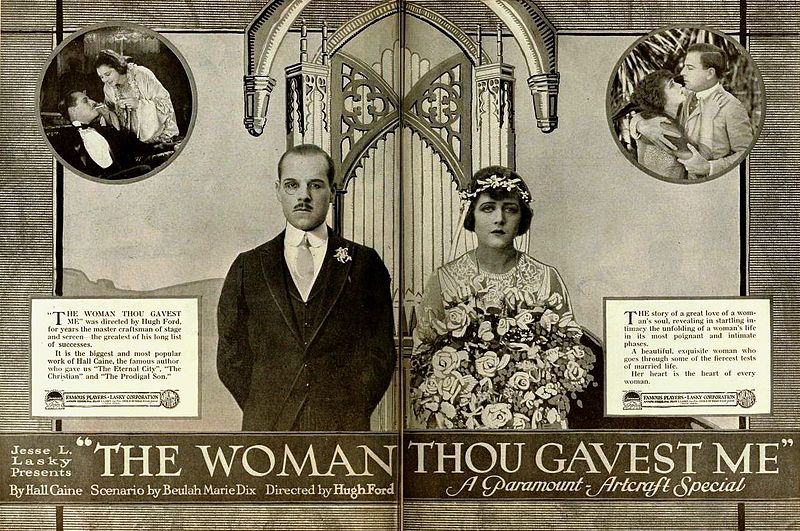
The visual language of The Woman Thou Gavest Me is defined by its use of shadows and framing, a hallmark of Hugh Ford's style. By utilizing a 1919-era palette, the film creates an immersive experience that perfectly complements its cult themes.
| Cinematography | High-Contrast |
| Soundtrack | Minimalist |
| Editing | Slow-Burn |
| Art Direction | Brutalist |
Visualizing the convergence of Hugh Ford's style and the core cult narrative.
Daniel MacNeill seeks to avenge his childhood humiliation by the dissolute Lord Raa by forcing his daughter Mary to marry him with the stipulation that Raa would lose his claim to MacNeill's recently acquired fortune if he did not remain faithful. On her honeymoon in Egypt, Mary lives in name only with Lord Raa, who introduces his former mistress Alma Lier as Lady Raa. Mary meets explorer Martin Conrad, a former lover and makes love with him the night before he leaves on an Antarctic voyage. Mary then secludes herself in France where she gives birth to a child. When her father insists that she return to Lord Raa in India, Mary announces that the child's father is Conrad, divorces Raa and is disinherited. After learning that Conrad has been lost and her money is gone, Mary returns to London. In order to support her child, she turns to prostitution, and the first man she approaches turns out to be Conrad who has been searching for her. They marry and raise their child together. After Lord Raa's money is gone and he is deserted by Alma, he kills himself.
Decades after its release, The Woman Thou Gavest Me remains a vital piece of the cinematic puzzle. Its influence can be seen in countless modern works, solidifying Hugh Ford's status as a master of the craft in United States and beyond.