
DbcultAccessing Vault...
Director's Spotlight
Senior Film Conservator
Director's Spotlight: United States
A Deep Dive into the 1924 Vision of Irvin Willat
Analyzing Three Miles Out (1924) requires a deep dive into the defining moment in Drama history that Irvin Willat helped create. Defining a new era of United States artistic expression, it transcends regional boundaries to tell a universal story.
In Three Miles Out, Irvin Willat pushes the boundaries of conventional narrative. The film's unique approach to its subject matter has sparked endless debates and interpretations among cinephiles and critics alike.
| Cinematography | Static |
| Soundtrack | Minimalist |
| Editing | Slow-Burn |
| Art Direction | Brutalist |
Visualizing the convergence of Irvin Willat's style and the core Drama narrative.
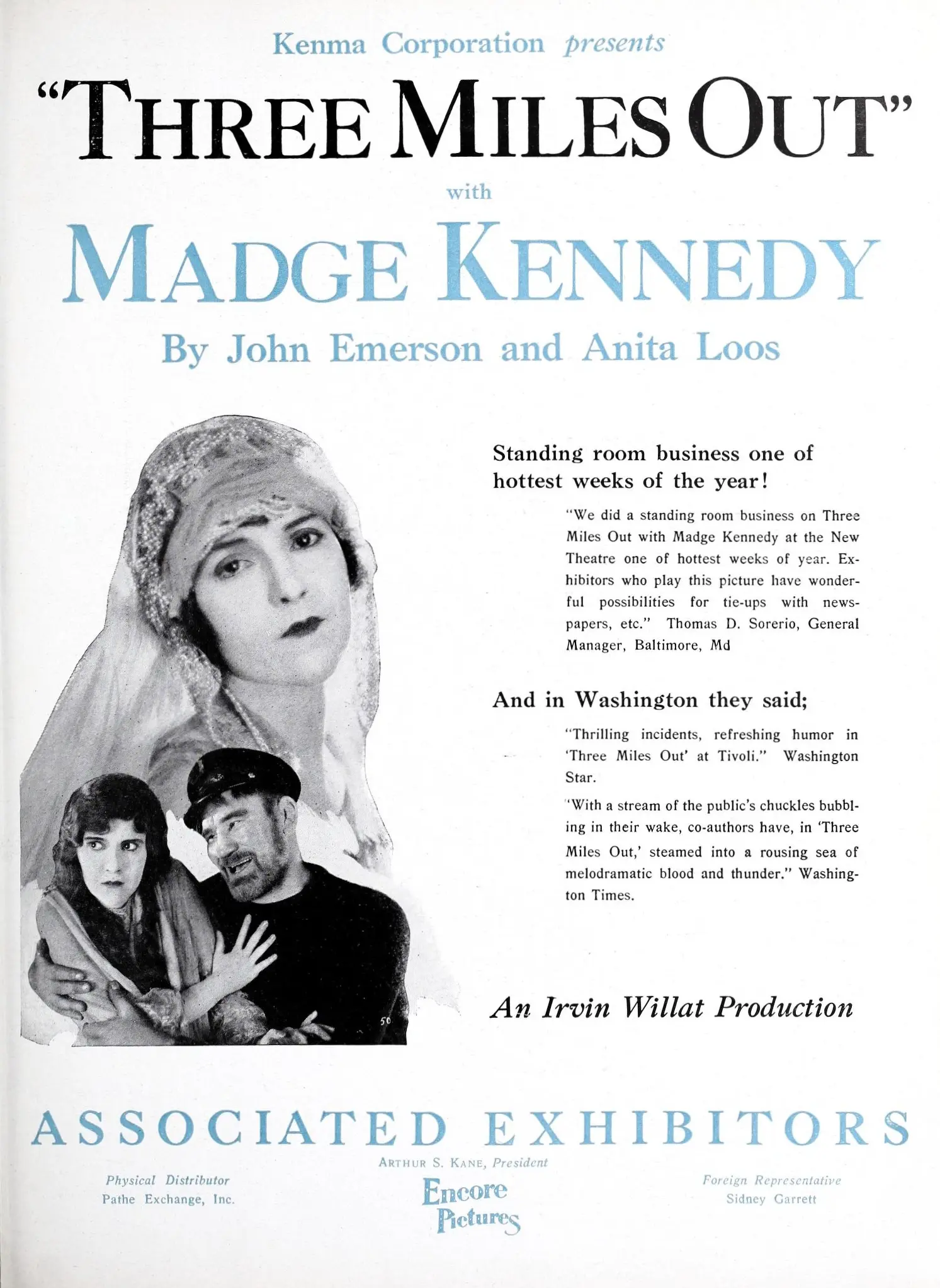
Molly Townsend, engaged to Luis Riccardi, learns from Capt. John Locke half an hour before the wedding that Riccardi is a thief and a smuggler. Locke, Riccardi's rival for Molly, persuades Molly to sail away with him in his boat bound for South America. He is thrown overboard by the cutthroat crew, and crew leader Jordan nearly makes her his victim before Locke, who has saved himself, rescues her. Riccardi and Jordan, who murdered a man in the Townsend home and stole a diamond necklace, are both jailed.
Decades after its release, Three Miles Out remains a vital piece of the cinematic puzzle. Its influence can be seen in countless modern works, solidifying Irvin Willat's status as a master of the craft in United States and beyond.