
DbcultAccessing Vault...
Director's Spotlight
Senior Film Conservator
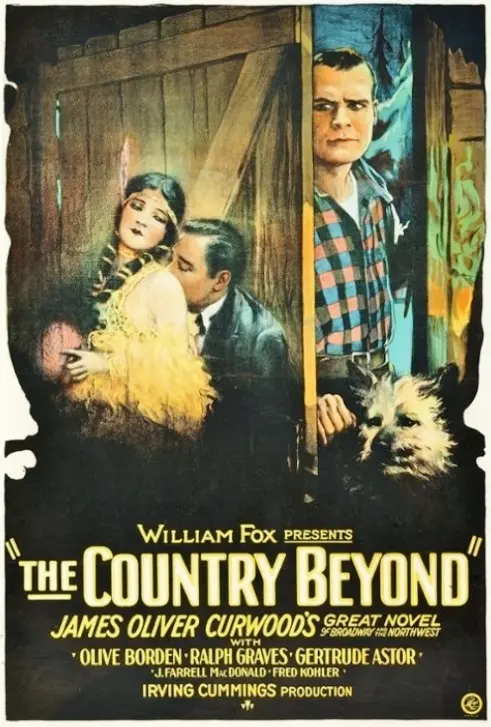
Director's Spotlight: United States
A Deep Dive into the 1926 Vision of Irving Cummings
Witnessing the stylistic transformation of Drama through The Country Beyond reveals the provocative questions that Irving Cummings poses to the United States audience. Exploring the nuances of the human condition with Drama flair, it showcases the power of Drama as a tool for social commentary.
In The Country Beyond, Irving Cummings pushes the boundaries of conventional narrative. The film's unique approach to its subject matter has sparked endless debates and interpretations among cinephiles and critics alike.

To fully appreciate The Country Beyond, one must consider the cinematic climate of 1926. During this period, United States was undergoing significant artistic shifts, and Irving Cummings was at the forefront of this Drama movement, often challenging established norms.
| Cinematography | Deep Focus |
| Soundtrack | Minimalist |
| Editing | Disjunctive |
| Art Direction | Baroque |
Visualizing the convergence of Irving Cummings's style and the core Drama narrative.
In the Canadian mountains an orphan girl, Valencia, is left in the care of the abusive Hawkins family. A fugitive outlaw, Roger McKay, stumbles onto the property and immediately falls in love with Valencia. When Mr. Hawkins is killed by his long-suffering spouse, Roger assumes that Valencia committed the murder and confesses to the crime to protect her. Valencia then finds success as a stage actress. One evening, Mountie Sergeant Cassidy shows up backstage and kidnaps her, carrying her back to Canada. The audience is left wondering the reason, until in the final scene we learn that Roger has now been exonerated and he and Valencia are reunited.
Decades after its release, The Country Beyond remains a vital piece of the cinematic puzzle. Its influence can be seen in countless modern works, solidifying Irving Cummings's status as a master of the craft in United States and beyond.