
DbcultAccessing Vault...
Director's Spotlight
Senior Film Conservator

Director's Spotlight: United States
A Deep Dive into the 1919 Vision of J. Gordon Edwards
The 1919 release of A Woman There Was marked a significant moment for the stylistic boundaries pushed by J. Gordon Edwards during the production. In the context of United States's rich cinematic history, it invites us to question our own perceptions of cult narratives.
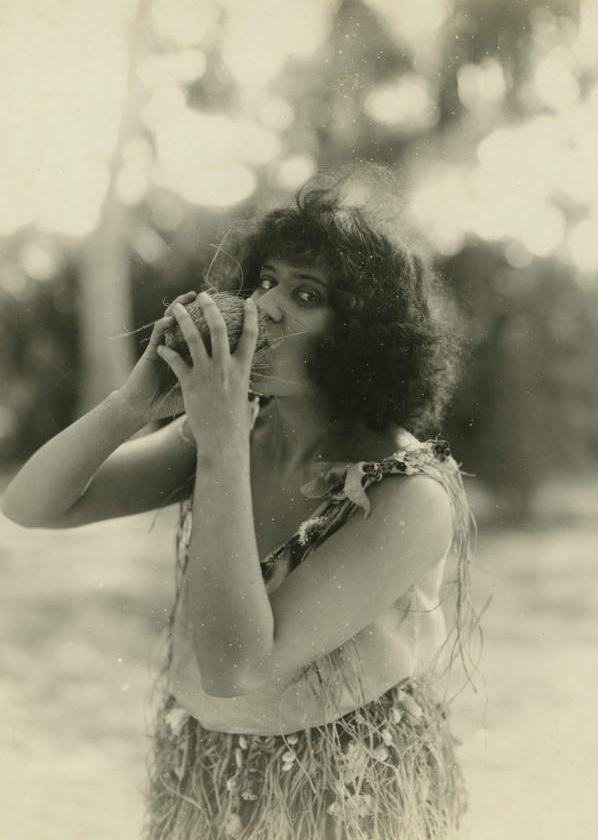
In A Woman There Was, J. Gordon Edwards pushes the boundaries of conventional narrative. The film's unique approach to its subject matter has sparked endless debates and interpretations among cinephiles and critics alike.
| Cinematography | High-Contrast |
| Soundtrack | Minimalist |
| Editing | Slow-Burn |
| Art Direction | Brutalist |
Visualizing the convergence of J. Gordon Edwards's style and the core cult narrative.
Pulke, a pearl diver on the South Sea island of Kolpee, loves Zara, Chief Majah's daughter, who is content with him until a New England missionary, Winthrop Stark, arrives. When Stark refuses Zara's marriage proposal because he is already engaged, she interrupts his sermon by grasping his knees and crying that he has no right to preach about brotherly love as he does not know what love is. Zara saves Stark from Pulke's jealous attack with a spear, and when the priest orders Stark sacrificed to appease the gods and stop a typhoon, she goes to drown herself in the sea in his place. Stark saves her, but because of his exertions, lapses into unconsciousness. Zara, now the reigning Princess since Majah died in the storm, learns that the black pearl buried with him can save Stark. She steals it and Stark recovers and leaves, but Zara dies holding off the angry natives, led by Pulke, who accidentally spear her while trying to recover the pearl.
Decades after its release, A Woman There Was remains a vital piece of the cinematic puzzle. Its influence can be seen in countless modern works, solidifying J. Gordon Edwards's status as a master of the craft in United States and beyond.