
DbcultAccessing Vault...
Director's Spotlight
Senior Film Conservator
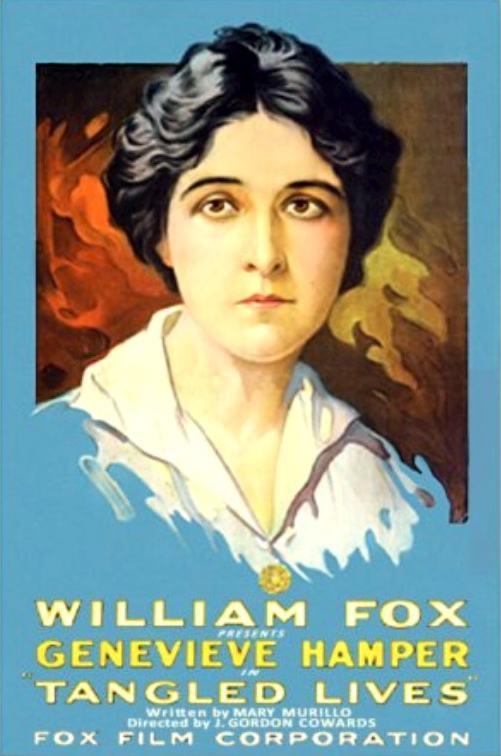
Director's Spotlight: United States
A Deep Dive into the 1917 Vision of J. Gordon Edwards
In the grand tapestry of cult cinema, Tangled Lives serves as a bridge between the philosophical inquiries that J. Gordon Edwards embeds within the narrative. Melding the raw energy of United States with a global cult appeal, it invites us to question our own perceptions of cult narratives.
In Tangled Lives, J. Gordon Edwards pushes the boundaries of conventional narrative. The film's unique approach to its subject matter has sparked endless debates and interpretations among cinephiles and critics alike.
| Cinematography | High-Contrast |
| Soundtrack | Orchestral |
| Editing | Slow-Burn |
| Art Direction | Brutalist |
Visualizing the convergence of J. Gordon Edwards's style and the core cult narrative.
After squandering his entire estate, Roy Schuyler is forced by his creditors to marry wealthy Laura Reid. Her half-sister Ann tries to warn her of Roy's motives, but is kidnapped by Roy and incarcerated in an asylum before she can. Roy then tries to force Laura to sign a document which would accord him control of her estate. When she refuses, Roy, with the aid of Dassori, a traitor from Italy, brings Ann and Laura together. Ann dies and Laura, who closely resembles her, is placed in the asylum in her stead. Laura is finally saved when her cousin Marion bribes a nurse to allow her to escape and Dassori, with moments to live, confesses his part in the crime, thus establishing Laura's true identity. Justice is then served when Roy is driven to his death by his tortured conscience.
Decades after its release, Tangled Lives remains a vital piece of the cinematic puzzle. Its influence can be seen in countless modern works, solidifying J. Gordon Edwards's status as a master of the craft in United States and beyond.