
DbcultAccessing Vault...
Director's Spotlight
Senior Film Conservator
Director's Spotlight: United States
A Deep Dive into the 1925 Vision of Jack Nelson
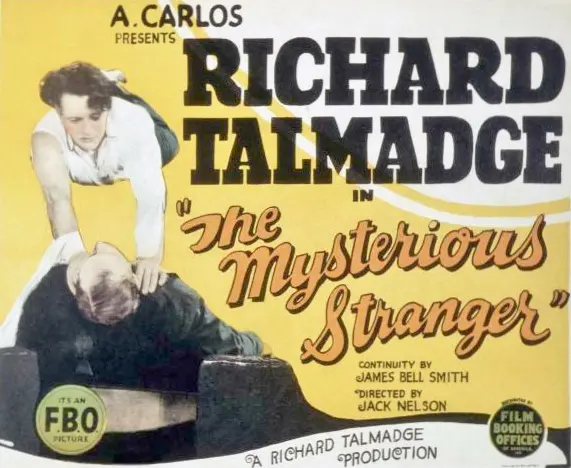
The 1925 release of The Mysterious Stranger marked a significant moment for the stylistic boundaries pushed by Jack Nelson during the production. In the context of United States's rich cinematic history, it invites us to question our own perceptions of Action narratives.
In The Mysterious Stranger, Jack Nelson pushes the boundaries of conventional narrative. The film's unique approach to its subject matter has sparked endless debates and interpretations among cinephiles and critics alike.
To fully appreciate The Mysterious Stranger, one must consider the cinematic climate of 1925. During this period, United States was undergoing significant artistic shifts, and Jack Nelson was at the forefront of this Action movement, often challenging established norms.
| Cinematography | Deep Focus |
| Soundtrack | Orchestral |
| Editing | Slow-Burn |
| Art Direction | Brutalist |
Visualizing the convergence of Jack Nelson's style and the core Action narrative.
Raoul Lesage suspects his wife, April, of infidelity with Herman Bennett, an artist, and forsakes her, living for the next 20 years in a hermitage surrounded by high walls. He is accompanied in this solitary life only by his young son, Paul, who, at the age of 21, has not seen anything of women or the world. One night, Paul walks in his sleep and wanders from his home. He falls into the company of his mother (whom he does not recognize), Bennett, and Bennett's beautiful ward, Helen, with whom Paul soon falls in love. After a series of thrilling adventures, Paul foils Bennett and reunites his parents; he and Helen hear wedding bells.
Decades after its release, The Mysterious Stranger remains a vital piece of the cinematic puzzle. Its influence can be seen in countless modern works, solidifying Jack Nelson's status as a master of the craft in United States and beyond.