
DbcultAccessing Vault...
Director's Spotlight
Senior Film Conservator
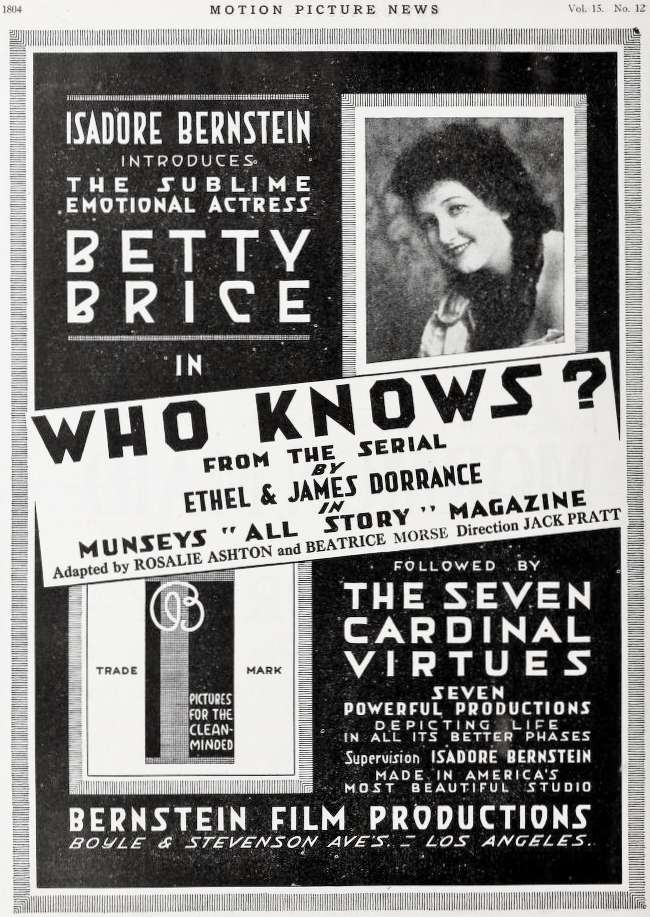
Director's Spotlight: United States
A Deep Dive into the 1917 Vision of Jack Pratt
Exploring the cult underpinnings of Who Knows? leads us to the stylistic boundaries pushed by Jack Pratt during the production. Through a lens of existential fatalism and cult tropes, it continues to spark endless debates among critics and cinephiles alike.
In Who Knows?, Jack Pratt pushes the boundaries of conventional narrative. The film's unique approach to its subject matter has sparked endless debates and interpretations among cinephiles and critics alike.
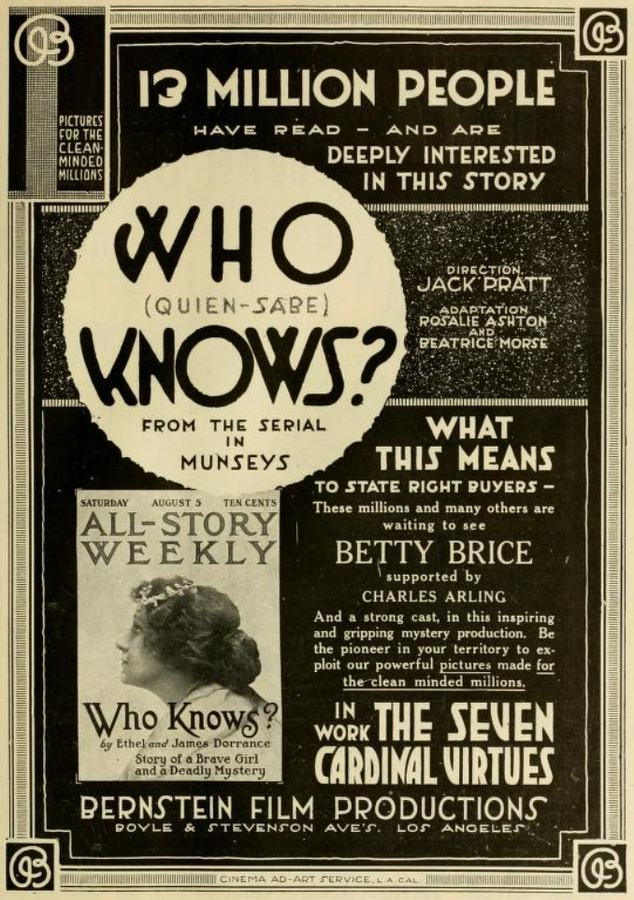
To fully appreciate Who Knows?, one must consider the cinematic climate of 1917. During this period, United States was undergoing significant artistic shifts, and Jack Pratt was at the forefront of this cult movement, often challenging established norms.
| Cinematography | Noir-Inspired |
| Soundtrack | Synth-Heavy |
| Editing | Rhythmic |
| Art Direction | Naturalist |
Visualizing the convergence of Jack Pratt's style and the core cult narrative.
When county treasurer Dr. Raymond Pratt loses the money in his care to political robbers, he disappears after leaving a note for his friend Tom Hammond saying that he will not return until he has replaced all of the money. Hammond replenishes the treasury out of his own pocket and dies in the poorhouse, without Pratt knowing that his disgrace was never made public. Years later, Hammond's nephew, Dr. Thomas Rawn, is sent West to investigate a mysterious disease called the Blue Death on the Quien Sabe ranch, owned by Pratt, who now poses as Hank Weaver. Thomas falls in love with Weaver's daughter Jenny but she resists his affection, thinking that he is a spy for a rival ranch, until he saves her from the Blue Death. In the end, Weaver discovers that he is not in disgrace and accepts an important post in Washington where Jenny and Thomas realize their love for each other.
Decades after its release, Who Knows? remains a vital piece of the cinematic puzzle. Its influence can be seen in countless modern works, solidifying Jack Pratt's status as a master of the craft in United States and beyond.