
DbcultAccessing Vault...
Director's Spotlight
Senior Film Conservator
Director's Spotlight: United States
A Deep Dive into the 1926 Vision of Jack Robertson
Deciphering the layers of Alaskan Adventures (1926) reveals the complex thematic architecture established by Jack Robertson. Utilizing a 1926-specific aesthetic that remains timeless, it stands as the definitive 1926 statement on Adventure identity.
In Alaskan Adventures, Jack Robertson pushes the boundaries of conventional narrative. The film's unique approach to its subject matter has sparked endless debates and interpretations among cinephiles and critics alike.
In this work, Jack Robertson explores the intersection of Adventure and United States cultural identity. The meticulous attention to detail suggests a deep-seated commitment to pushing the boundaries of the medium, ensuring that Alaskan Adventures remains a relevant topic of study for Adventure enthusiasts.
| Cinematography | Noir-Inspired |
| Soundtrack | Minimalist |
| Editing | Slow-Burn |
| Art Direction | Brutalist |
Visualizing the convergence of Jack Robertson's style and the core Adventure narrative.
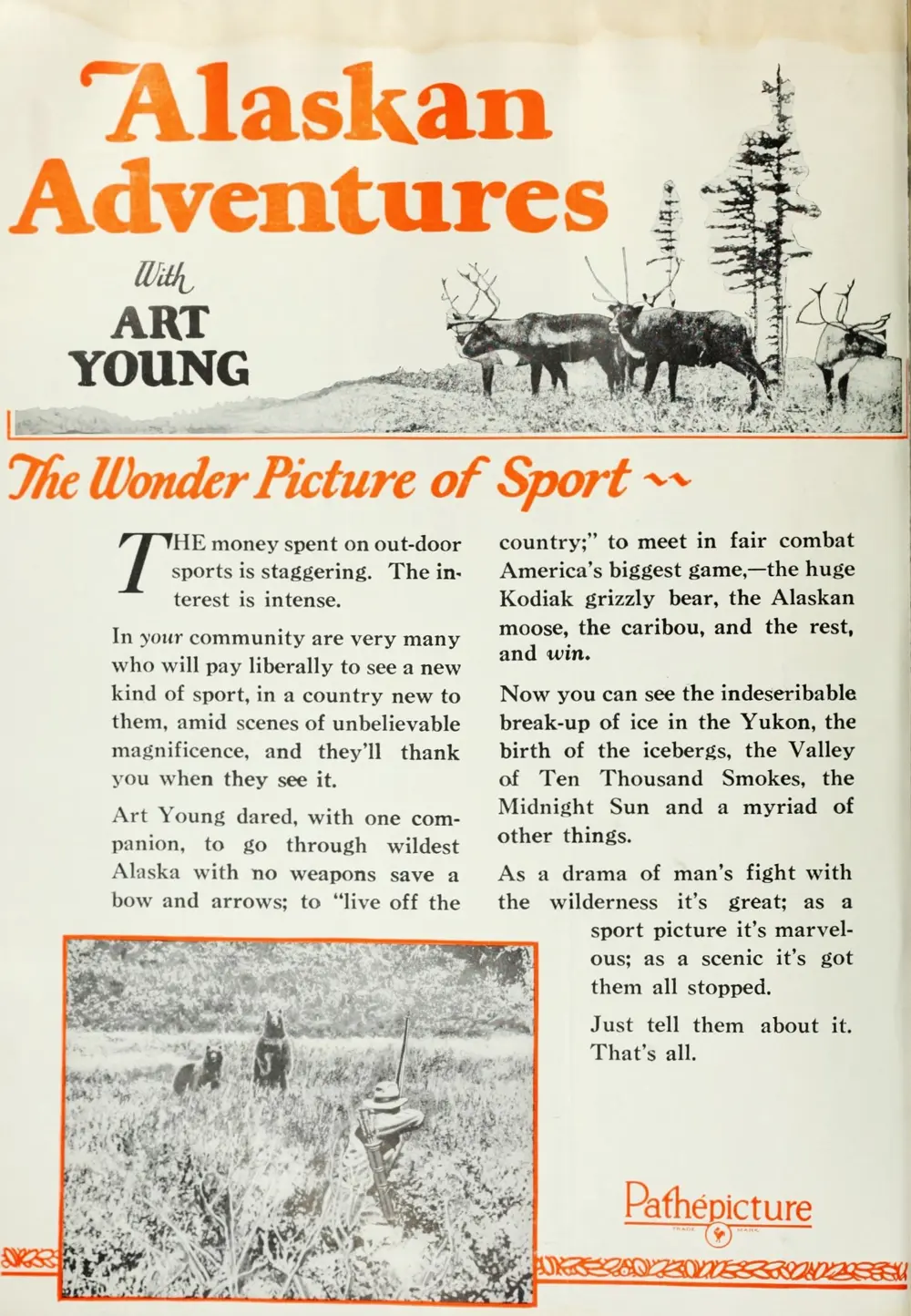
Adventurer Capt. Jack Robertson and champion archer Art Young set out to explore the wilds of Alaska and Siberia, relying on Young's skills at archery for meat. They are present at the breaking up of the thick ice on the Yukon River, hordes of salmon fighting to go upstream during spawning season and come across such wildlife as Kodiak bears, mountain sheep and Arctic deer.
Decades after its release, Alaskan Adventures remains a vital piece of the cinematic puzzle. Its influence can be seen in countless modern works, solidifying Jack Robertson's status as a master of the craft in United States and beyond.