
DbcultAccessing Vault...
Director's Spotlight
Senior Film Conservator
Director's Spotlight: France
A Deep Dive into the 1920 Vision of Jacques de Baroncelli
Peeling back the layers of Jacques de Baroncelli's La rafale exposes the collaborative alchemy between Jacques de Baroncelli and the 1920 creative team. Anchored by a narrative that is both personal and universal, it reinforces the idea that cinema is a medium of infinite possibilities.
In La rafale, Jacques de Baroncelli pushes the boundaries of conventional narrative. The film's unique approach to its subject matter has sparked endless debates and interpretations among cinephiles and critics alike.
| Cinematography | Noir-Inspired |
| Soundtrack | Orchestral |
| Editing | Invisible |
| Art Direction | Kitsch |
Visualizing the convergence of Jacques de Baroncelli's style and the core cult narrative.
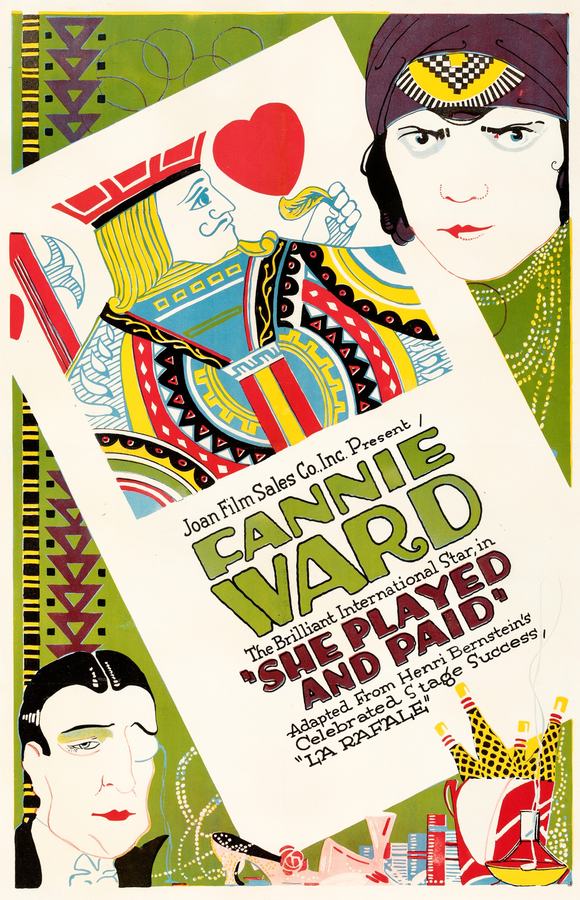
Madame la Baronne le Bourge has been forced into a marriage of convenience with Baron Le Bourge, while loving Robert de Chaceroy. In despair over her marriage, he gambles wildly, uses Government funds entrusted to his care, and loses all. He then endeavors to recoup the loss by betting on the Baron's horse, but loses there also. The Baronne learns of his distress and suggests the money lender, Bragelin. Chaceroy is unable to raise the funds by any means and sees but one honorable way out of his predicament, that of suicide. The Baronne tries to pawn her jewels, but cannot do so without her husband's consent. She tries to get money from the Baron, but on account of the huge sum involved, he becomes suspicious and in an intense scene, learns of her affair with Chaceroy. In despair she goes to Jean Dupree, a writer of sensational literature, who is infatuated with her. He offers to loan the money on one condition. The Baronne refuses the dishonorable conditions, but finally yields through her love of Chaceroy. She hastens to Chaceroy with the money, but is too late. It was necessary to have the money by six o'clock that evening. Failing, he had committed suicide.
Decades after its release, La rafale remains a vital piece of the cinematic puzzle. Its influence can be seen in countless modern works, solidifying Jacques de Baroncelli's status as a master of the craft in France and beyond.