
DbcultAccessing Vault...
Director's Spotlight
Senior Film Conservator
Director's Spotlight: United States
A Deep Dive into the 1922 Vision of James Cruze
The enduring fascination with Is Matrimony a Failure? is a testament to the artistic risks taken by James Cruze that eventually paid off. Challenging the viewer to find meaning in the Comedy shadows, it reminds us of the fragility and beauty of the 1922s.
In Is Matrimony a Failure?, James Cruze pushes the boundaries of conventional narrative. The film's unique approach to its subject matter has sparked endless debates and interpretations among cinephiles and critics alike.
While deeply rooted in United States, Is Matrimony a Failure? has achieved a global reach, influencing directors from various backgrounds. Its ability to translate Comedy tropes into a universal cinematic language is why it remains a cult staple decades after its 1922 release.
| Cinematography | Noir-Inspired |
| Soundtrack | Minimalist |
| Editing | Slow-Burn |
| Art Direction | Brutalist |
Visualizing the convergence of James Cruze's style and the core Comedy narrative.
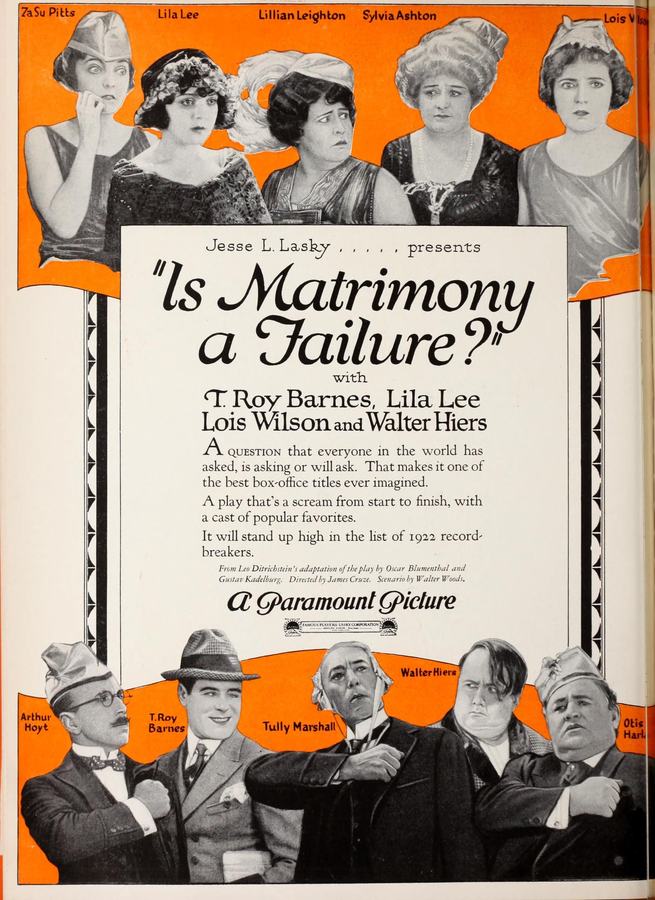
Mr. and Mrs. Amos Saxby's silver wedding anniversary is interrupted by the surprise elopement of their daughter Margaret with bank clerk Arthur Haviland. Law student Dudley King, and rival suitor for Margaret, announces that the marriage-license clerk is on vacation and that the license obtained by the elopers is invalid; he wires the proprietor of the lodge where the couple plan to spend their honeymoon, and Arthur and his wife indignantly return home. Demanding an explanation from the assistant clerk, Arthur learns that all marriages processed in November for the past 30 years are void because the clerk had not then been sworn in, and in consequence many households dissolve. But the husbands do not relish their newly-gained freedom, and when the license clerk returns, he declares all the marriages legal. Arthur rescues his bride just as King is about to carry her off, and the matrimonial routine begins.
Decades after its release, Is Matrimony a Failure? remains a vital piece of the cinematic puzzle. Its influence can be seen in countless modern works, solidifying James Cruze's status as a master of the craft in United States and beyond.