
DbcultAccessing Vault...
Director's Spotlight
Senior Film Conservator
Director's Spotlight: United States
A Deep Dive into the 1920 Vision of James Cruze
Deciphering the layers of Mrs. Temple's Telegram (1920) reveals the complex thematic architecture established by James Cruze. Utilizing a 1920-specific aesthetic that remains timeless, it stands as the definitive 1920 statement on Comedy identity.
In Mrs. Temple's Telegram, James Cruze pushes the boundaries of conventional narrative. The film's unique approach to its subject matter has sparked endless debates and interpretations among cinephiles and critics alike.
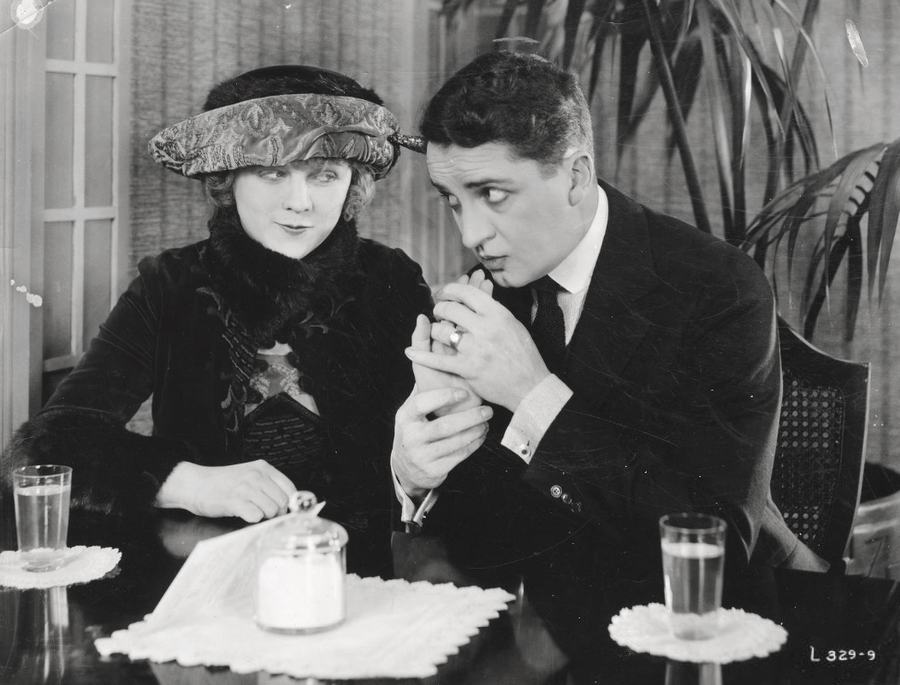
The visual language of Mrs. Temple's Telegram is defined by its use of shadows and framing, a hallmark of James Cruze's style. By utilizing a 1920-era palette, the film creates an immersive experience that perfectly complements its Comedy themes.
| Cinematography | Noir-Inspired |
| Soundtrack | Experimental |
| Editing | Invisible |
| Art Direction | Kitsch |
Visualizing the convergence of James Cruze's style and the core Comedy narrative.
Jack Temple adores his wife, but she remains extremely jealous of him. At an ice-cream parlor, Jack is attracted to a flirtatious vamp and meets her again later on a department store's roof garden. They linger so long that the store closes and the couple are locked out for the night. The next day, realizing that his wife will not believe the truth, Jack tells her that he spent the night with his friend, John Brown. Mrs. Templeton, suspecting that this is a lie, wires John Brown to come. Jack then convinces his friend Frank Fuller to pose as Brown, but the real Brown, who is Mrs. Temple's Italian hairdresser and is secretly in love with her, arrives on the scene. Brown's wife follows in a jealous panic. Then the vamp appears and confesses that she is actually Mrs. Temple's cousin, who hatched the whole scheme to cure her cousin's jealousy.
Decades after its release, Mrs. Temple's Telegram remains a vital piece of the cinematic puzzle. Its influence can be seen in countless modern works, solidifying James Cruze's status as a master of the craft in United States and beyond.