
DbcultAccessing Vault...
Director's Spotlight
Senior Film Conservator
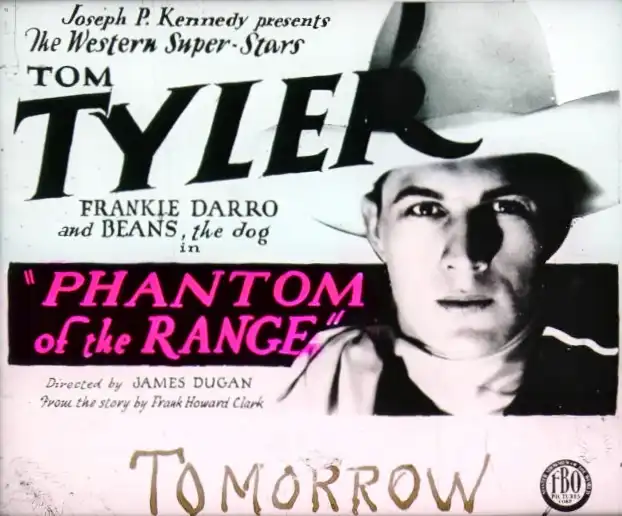
Director's Spotlight: United States
A Deep Dive into the 1928 Vision of James Dugan
The brilliance of Phantom of the Range (1928) is inseparable from a monumental shift in Western filmmaking spearheaded by James Dugan. Occupying a unique space between Western and pure art, it serves as a blueprint for future generations of Western directors.
In Phantom of the Range, James Dugan pushes the boundaries of conventional narrative. The film's unique approach to its subject matter has sparked endless debates and interpretations among cinephiles and critics alike.
| Cinematography | Static |
| Soundtrack | Minimalist |
| Editing | Slow-Burn |
| Art Direction | Brutalist |
Visualizing the convergence of James Dugan's style and the core Western narrative.
Duke Carlton, an actor stranded in a small western town, gets a job as a cowboy on Tim O'Brien's ranch as a reward for beating up "Flash" Corbin, a real estate agent who has been trying to swindle the rancher. A romance develops between the actor and Patsy O'Brien, the rancher's daughter, but it is interrupted by the appearance of his former stage partner, Vera Van Swank, who claims him as her husband. He clears himself of the bigamy charge, foils a plot to cheat the rancher out of a $90,000 land property, and wins the daughter's hand.
Decades after its release, Phantom of the Range remains a vital piece of the cinematic puzzle. Its influence can be seen in countless modern works, solidifying James Dugan's status as a master of the craft in United States and beyond.