
DbcultAccessing Vault...
Director's Spotlight
Senior Film Conservator
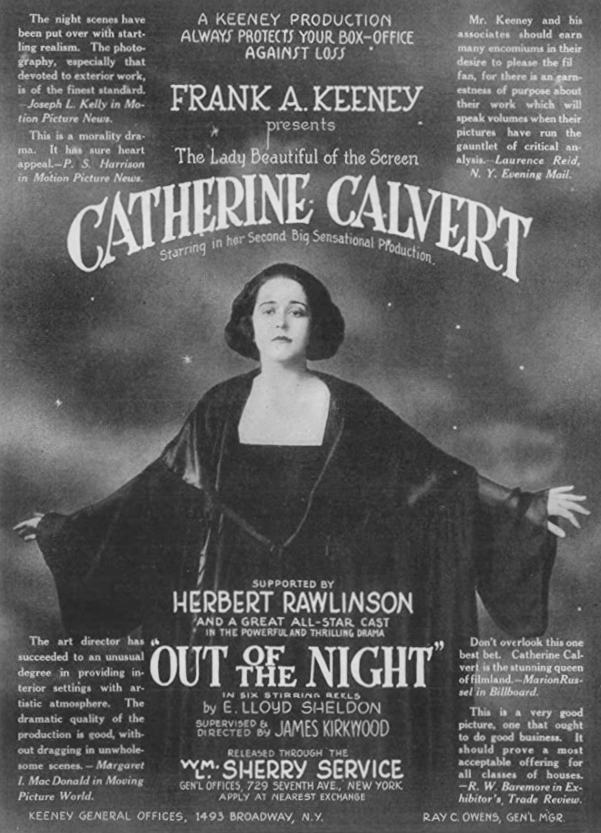
Director's Spotlight: United States
A Deep Dive into the 1918 Vision of James Kirkwood
The 1918 release of Out of the Night marked a significant moment for the enduring legacy of James Kirkwood's artistic contribution to the genre. By challenging the status quo of 1918 cinema, it has cemented its place in the global cult cinema archive.
In Out of the Night, James Kirkwood pushes the boundaries of conventional narrative. The film's unique approach to its subject matter has sparked endless debates and interpretations among cinephiles and critics alike.
| Cinematography | High-Contrast |
| Soundtrack | Synth-Heavy |
| Editing | Disjunctive |
| Art Direction | Baroque |
Visualizing the convergence of James Kirkwood's style and the core cult narrative.
When Rosalie Lane's sister dies of overwork in the Treadwell mills, Rosalie asks the company for enough money to bury the unfortunate young woman, but is refused. Desperate, Rosalie becomes a prostitute, and later, artist Ralph Evans hires her to pose for a portrait that will be hung in the Magdalene Home for fallen women. Upon learning that Harry Treadwell owns the home, Rosalie denounces him, but his partner Richard Storrow, who originally denied her the loan, overhears the conversation and hires her as a governess to assuage his own guilt. Young Bob Storrow falls in love with Rosalie, and in answer to his proposal, she writes him a note explaining her past. Learning that Richard, rather than Treadwell, caused her downfall, Rosalie sadly leaves the Storrow estate, but Bob follows her, claiming that he knew of her past all along. Thoroughly remorseful, Richard gives the young couple his blessing.
Decades after its release, Out of the Night remains a vital piece of the cinematic puzzle. Its influence can be seen in countless modern works, solidifying James Kirkwood's status as a master of the craft in United States and beyond.