
DbcultAccessing Vault...
Director's Spotlight
Senior Film Conservator
Director's Spotlight: United States
A Deep Dive into the 1915 Vision of James Kirkwood
The evocative power of The Fatal Card stems from the unique collaboration between the subversive storytelling techniques employed by James Kirkwood in 1915. Synthesizing the best elements of United States and international cinema, it reminds us of the fragility and beauty of the 1915s.
In The Fatal Card, James Kirkwood pushes the boundaries of conventional narrative. The film's unique approach to its subject matter has sparked endless debates and interpretations among cinephiles and critics alike.
To fully appreciate The Fatal Card, one must consider the cinematic climate of 1915. During this period, United States was undergoing significant artistic shifts, and James Kirkwood was at the forefront of this cult movement, often challenging established norms.
| Cinematography | Deep Focus |
| Soundtrack | Synth-Heavy |
| Editing | Disjunctive |
| Art Direction | Baroque |
Visualizing the convergence of James Kirkwood's style and the core cult narrative.
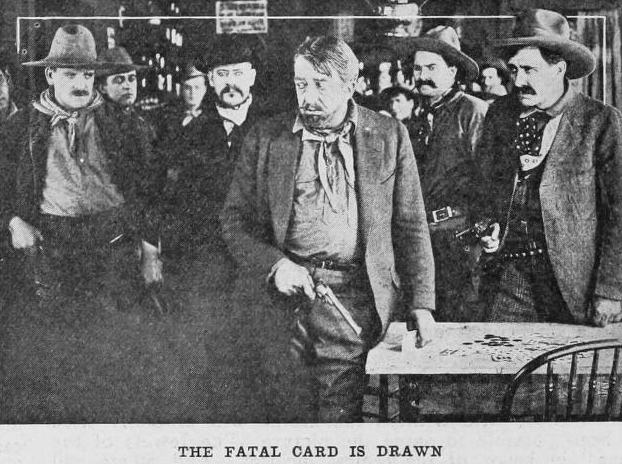
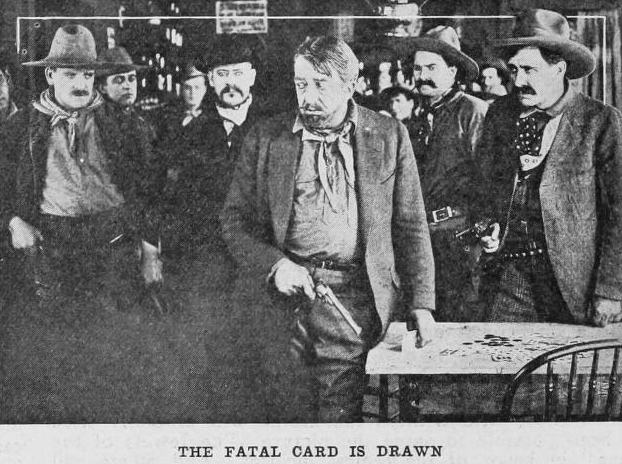
A notorious gambler and card cheat, George Forrester, rules a little western town with an iron hand. The men of the town plot to catch him cheating and do, but his men save him from danger. In the same town lives Gerald Austen, or Aitkens, who had left his tyrannical father in the east and made good in the west. Later, Forrester and his men rob a payroll messenger for Austen's enterprise. Forrester is apprehended and is about to be hung when Austen saves his life. The man has just been scribbling a message to his daughter who lives in the east and who believes her father a prosperous mine operator. On being saved he tears the card in two and gives half to Austen, saying that if he ever needs a friend that will be his passport. Forrester then returns east, rejoins his daughter and assumes his real name of Marrable. Austen also goes east under his real name of Aitkens and the men later meet but do not recognize each other. Austen falls in love with Margaret Marrable. Marrable's happiness, however, is curtailed by the arrival of his former western associates who threaten to expose his identity if he does not aid them in robbing Austen's father of a shipment of English bonds. He is forced to consent. The gang rents offices opposite those of Austen and await the day of shipment, July 4. Fortune plays into their hands when the boy visits his father to obtain consent for marriage to Margaret. The father refuses and a stormy quarrel ensues, which employees overhear. The son leaves his walking stick. The conspirators enter the office. In order to quiet the elder Austen they hit him over the head with the stick. The blow kills him. The boy returns to make up, finds the door locked and leaves. The others then escape, taking the key with them. Later, the son overhears the gang dividing the spoils. He makes his presence known. They tell him that his death is inevitable. He asks Marrable to take a card out of his pocketbook. Marrable finds it. It is the fatal card. He now knows that Margaret's fiancé is the man who saved his life. In gratitude he takes upon himself responsibility for the crime and makes a supreme sacrifice, paving the way for the lovers' ultimate happiness.
Decades after its release, The Fatal Card remains a vital piece of the cinematic puzzle. Its influence can be seen in countless modern works, solidifying James Kirkwood's status as a master of the craft in United States and beyond.