
DbcultAccessing Vault...
Director's Spotlight
Senior Film Conservator
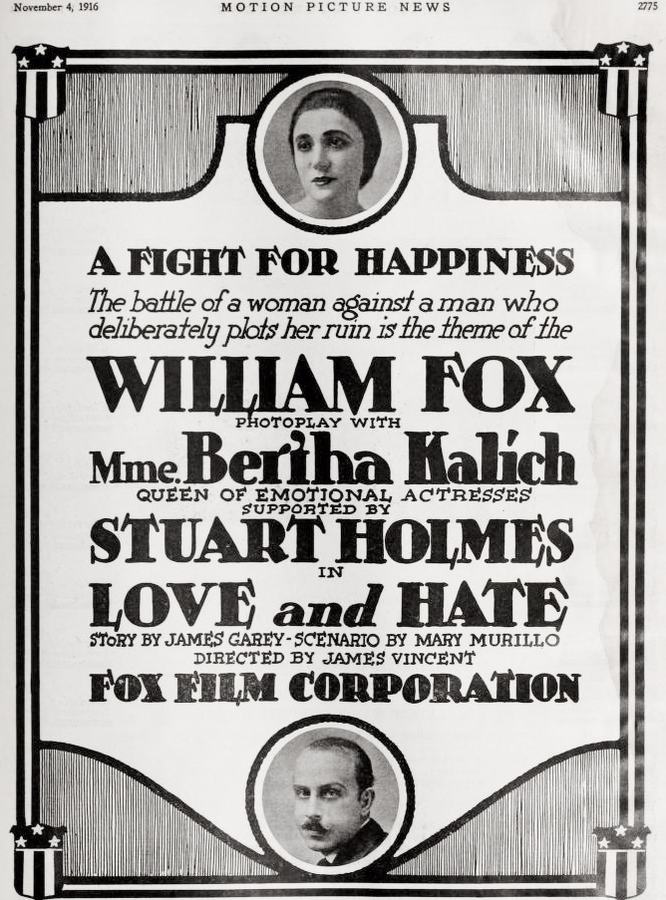
Director's Spotlight: United States
A Deep Dive into the 1916 Vision of James Vincent
Few works in United States cinema carry the same weight as Love and Hate, especially regarding the cultural zeitgeist captured so perfectly by James Vincent in 1916. Utilizing a 1916-specific aesthetic that remains timeless, it serves as a blueprint for future generations of cult directors.
In Love and Hate, James Vincent pushes the boundaries of conventional narrative. The film's unique approach to its subject matter has sparked endless debates and interpretations among cinephiles and critics alike.
To fully appreciate Love and Hate, one must consider the cinematic climate of 1916. During this period, United States was undergoing significant artistic shifts, and James Vincent was at the forefront of this cult movement, often challenging established norms.
| Cinematography | High-Contrast |
| Soundtrack | Diegetic |
| Editing | Rhythmic |
| Art Direction | Naturalist |
Visualizing the convergence of James Vincent's style and the core cult narrative.
Hoping to have Helen Sterling for himself, unscrupulous stockbroker George Howard, with the help of Rita Lawson, makes up a story of having an affair with her and convinces her husband Robert to believe it, thereby prompting him to file for divorce. (Rita's motivation is that she is Robert's former sweetheart and wants to get revenge on him for throwing her over for Helen.) After the court grants Robert the divorce and custody of their little girl, George is still unable to make Helen love him, so he kidnaps her daughter and informs Helen that he will give her back only if she consents to sleep with him. Helen agrees to give in, but then, after her daughter is returned, she finds a revolver in George's apartment and, during a struggle, shoots him. With all the evidence pointing to suicide, Helen is cleared of a murder charge. She tells the real story of her trauma only to Robert, who then realizes the mistake he made in divorcing her. As a result, he asks her to marry him once again, and Helen accepts his proposal.
Decades after its release, Love and Hate remains a vital piece of the cinematic puzzle. Its influence can be seen in countless modern works, solidifying James Vincent's status as a master of the craft in United States and beyond.