
DbcultAccessing Vault...
Director's Spotlight
Senior Film Conservator
Director's Spotlight: United States
A Deep Dive into the 1915 Vision of James W. Horne
Few works in United States cinema carry the same weight as The Strangler's Cord, especially regarding the technical innovation that James W. Horne introduced to the cult format. Subverting the expectations of the typical 1915 audience, it bridges the gap between traditional cult and contemporary vision.
In The Strangler's Cord, James W. Horne pushes the boundaries of conventional narrative. The film's unique approach to its subject matter has sparked endless debates and interpretations among cinephiles and critics alike.
While deeply rooted in United States, The Strangler's Cord has achieved a global reach, influencing directors from various backgrounds. Its ability to translate cult tropes into a universal cinematic language is why it remains a cult staple decades after its 1915 release.
| Cinematography | Handheld |
| Soundtrack | Synth-Heavy |
| Editing | Rhythmic |
| Art Direction | Naturalist |
Visualizing the convergence of James W. Horne's style and the core cult narrative.
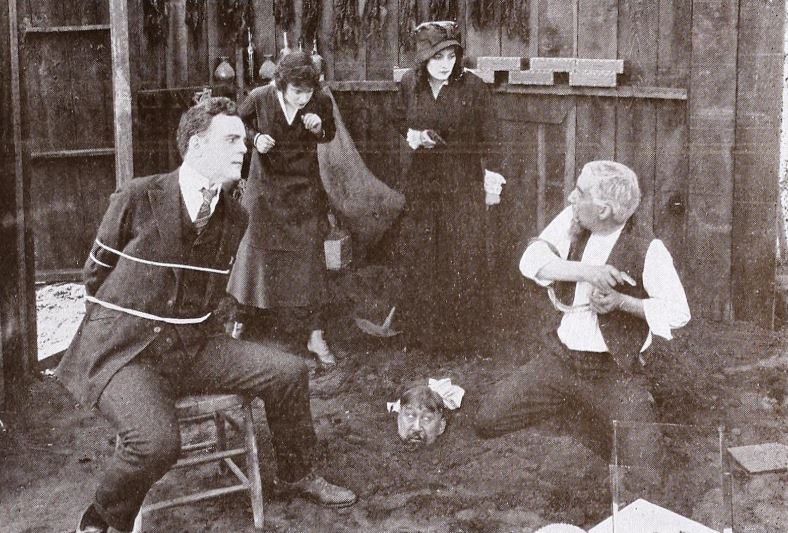
A series of remarkable attempts are made upon the life of Don Louis, who is stopping at the Grand Hotel. About to retire, he finds a cobra coiled in his bed. Later, a strangler's cord swishes through the air and encircles the Spaniard's neck. The man escapes death by a miracle. The third attempt occurs when a huge chandelier suspended directly above the table at which Don Louis sits, crashes down. Unnerved, the Spaniard begs Hilton, one of the hotel detectives, to spend the night with him. A few hours later, Hilton is found bound and gagged. He tells of a mysterious visitor who overpowered him and kidnapped Don Louis. No trace of the culprit and his victim can be found. Renee, daughter of Valdez, the cigarmaker who supplies the hotel with his wares, informs Hilton that her father has disappeared. The sympathetic detective accompanies the girl home. The two hear strange noises in the curing house back of the cottage. Investigating, Hilton comes upon Valdez and Don Louis. The latter is buried neck deep in the ground. Hilton, attempting to interfere, is overpowered by Valdez, who appears insane. The man informs him that years before, Don Louis had him kidnapped, after which the scoundrel stole his wife. The woman later died in want. From the hour he learned the truth, the wronged man lived only for revenge. His story told, Valdez kneels beside the don's head and slowly shoves a cobra toward the man's face. Frances Ballou, summoned by Renee, arrives just in time to save the don's life. Hilton tells her the story while liberating Don Louis. The terrible ordeal has revealed to the latter the depths of his infamy and he slinks away. Her heart touched. Frances resolves to keep the matter from the police.
Decades after its release, The Strangler's Cord remains a vital piece of the cinematic puzzle. Its influence can be seen in countless modern works, solidifying James W. Horne's status as a master of the craft in United States and beyond.