
DbcultAccessing Vault...
Director's Spotlight
Senior Film Conservator
Director's Spotlight: France
A Deep Dive into the 1925 Vision of Jean Painlevé
The enduring fascination with Stickelback Eggs is a testament to the artistic risks taken by Jean Painlevé that eventually paid off. Challenging the viewer to find meaning in the Short shadows, it reminds us of the fragility and beauty of the 1925s.
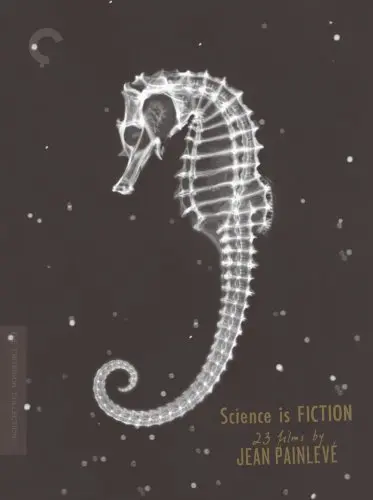
In Stickelback Eggs, Jean Painlevé pushes the boundaries of conventional narrative. The film's unique approach to its subject matter has sparked endless debates and interpretations among cinephiles and critics alike.
| Cinematography | High-Contrast |
| Soundtrack | Experimental |
| Editing | Elliptical |
| Art Direction | Expressionist |
Visualizing the convergence of Jean Painlevé's style and the core Short narrative.
An educational film, a movie through a microscope, in two parts. Within minutes after the egg drops in the water, fertilization occurs and contractions start. Soon, in a fertilized egg, we see the germinal disc divide into two blastomeres. Divisions continue; contractions re-occur at the cap as it covers the egg. Title cards in French tell us what to watch for. Muscular movements and circulation appear; the heart beats. In part two, we see blood circulation begin as red cells develop on the surface of the yoke. They mass toward the heart. Arteries form, blood flows. The egg hatches and blood flows to new areas.
Decades after its release, Stickelback Eggs remains a vital piece of the cinematic puzzle. Its influence can be seen in countless modern works, solidifying Jean Painlevé's status as a master of the craft in France and beyond.