
DbcultAccessing Vault...
Director's Spotlight
Senior Film Conservator
Director's Spotlight: United States
A Deep Dive into the 1915 Vision of J.J. Clark
The thematic gravity of The Yankee Girl (1915) is rooted in the artistic risks taken by J.J. Clark that eventually paid off. Defining a new era of United States artistic expression, it demands to be seen by anyone who cares about the art of film.
In The Yankee Girl, J.J. Clark pushes the boundaries of conventional narrative. The film's unique approach to its subject matter has sparked endless debates and interpretations among cinephiles and critics alike.
In this work, J.J. Clark explores the intersection of cult and United States cultural identity. The meticulous attention to detail suggests a deep-seated commitment to pushing the boundaries of the medium, ensuring that The Yankee Girl remains a relevant topic of study for cult enthusiasts.
| Cinematography | Deep Focus |
| Soundtrack | Synth-Heavy |
| Editing | Rhythmic |
| Art Direction | Naturalist |
Visualizing the convergence of J.J. Clark's style and the core cult narrative.
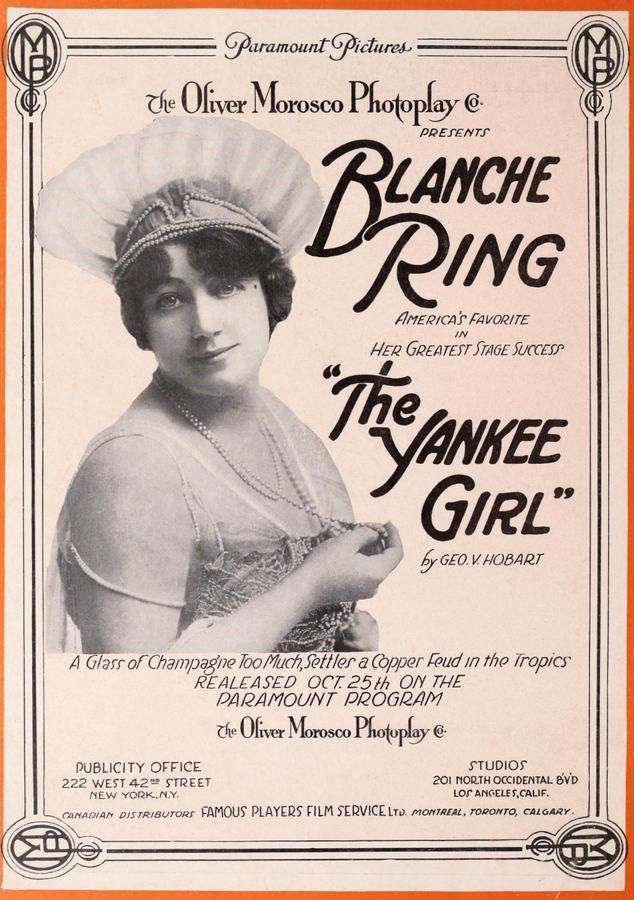
The race of the wealthy Gordon family in their crack yacht, "The Yankee Girl," to close an option on a valuable copper concession in Latin America and the political intrigue of the desperate James Seavey of the rival Pacific Copper crowd to prevent their arriving on time culminates when the quick-witted Jessie Gordon braves old President Ambroce Castroba, whom Seavey has bought out, in his own palace. The breezy blarney of the pretty North American girl goes to Castroba's head, as does the champagne she fools him into thinking she is drinking with him, and he forgets his agreement with Seavey and accepts the $5,000 first payment on the copper property, even lending her, to make it up, $50 which she had to pay one of his grafting customs officers. But before the transaction can be binding another final payment of $60,000 must be made in twenty-four hours, and Seavey redoubles his sinister efforts to frustrate it. He has already had Philip Gordon, the father, kidnapped by the ruthless Morales and his bandits and held prisoner in a secret hacienda in the interior, and he proceeds to establish a quarantine about "The Yankee Girl," so Jessie Gordon cannot possibly return and get the $60,000 which is on board. Jack Lawrence, a former sweetheart and now United States consul, executes an expert flank movement, however, by purchasing the yacht outright for his government, and when Seavey presumes to question his right to take possession he resorts to collar-and-elbow tactics and hurls the plotter bodily into the sea. Securing the $60,000 from the safe Lawrence makes a dash for shore in the launch, meeting Jessie who single-handed has rescued her father, and together they close the copper deal with President Castroba. The ensuing love scene is strictly Jessie Gordon's and Jack Lawrence's business.
Decades after its release, The Yankee Girl remains a vital piece of the cinematic puzzle. Its influence can be seen in countless modern works, solidifying J.J. Clark's status as a master of the craft in United States and beyond.