
DbcultAccessing Vault...
Director's Spotlight
Senior Film Conservator
Director's Spotlight: United States
A Deep Dive into the 1915 Vision of John B. O'Brien
As we revisit the 1915 masterpiece Her Shattered Idol, we are struck by the atmospheric immersion that John B. O'Brien achieves throughout Her Shattered Idol. Exploring the nuances of the human condition with cult flair, it solidifies John B. O'Brien's reputation as a master of the craft.
In Her Shattered Idol, John B. O'Brien pushes the boundaries of conventional narrative. The film's unique approach to its subject matter has sparked endless debates and interpretations among cinephiles and critics alike.
While deeply rooted in United States, Her Shattered Idol has achieved a global reach, influencing directors from various backgrounds. Its ability to translate cult tropes into a universal cinematic language is why it remains a cult staple decades after its 1915 release.
| Cinematography | Handheld |
| Soundtrack | Experimental |
| Editing | Invisible |
| Art Direction | Kitsch |
Visualizing the convergence of John B. O'Brien's style and the core cult narrative.
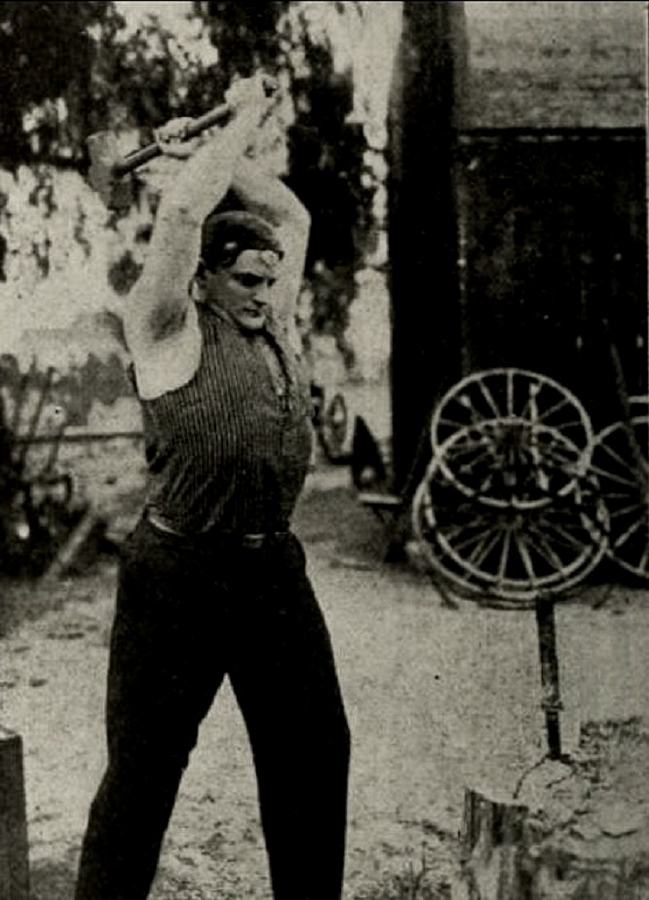
Mae Carter is the ward of Col. Aitken and the fiancée of his nephew Robert. They plight their troth and after much teasing from Mae, Bob succeeds in giving her an engagement ring. While Mae and Bobby are out riding one day the shoe of Mae's horse becomes loosened. She calls for Bob to exert his masculine strength and jerk the shoe from the horse's foot to save the horse further pain. After several unsuccessful pretenses to release the shoe they go to a blacksmith. Mae discovers in the blacksmith a man of extraordinary strength. He jerks the shoe from the horse with one pull, and thereby wins the admiration of Mae. That night Mae dreams that she is the cave woman of Robert, a cave man. While eating shrubs she is attacked by another giant cave man and about to be carried off when a rescuer appears, and he proves to be none other than the blacksmith. In the morning she pays a visit to his shop and takes a snapshot of him, much to the distress of Robert. She breaks off her engagement with Robert and is about to elope with the blacksmith when her uncle, having dealt with many women in his time, and knowing feminine ways better than Bob, concocts a scheme whereby he will induce the two to live at his house for a month to find out if they still love each other, at the end of which time he promises to consent to the marriage. The girl gives an engagement party and his conduct makes her see how impossible a match would be between the two. Thoroughly disgusted, she breaks off her engagement and returns to Robert. A marriage between her and Robert is arranged by the Colonel for the following day, and the blacksmith learning of it becomes jealous. When the ceremony is about to take place, the blacksmith comes to the house and steals the bride and plans to take her to a neighboring town and marry her himself. He gets away with her and after many hair-breadth escapades he finally gets caught in the quicksand with the girl but Robert releases him and the wedding takes place.
Decades after its release, Her Shattered Idol remains a vital piece of the cinematic puzzle. Its influence can be seen in countless modern works, solidifying John B. O'Brien's status as a master of the craft in United States and beyond.