
DbcultAccessing Vault...
Director's Spotlight
Senior Film Conservator
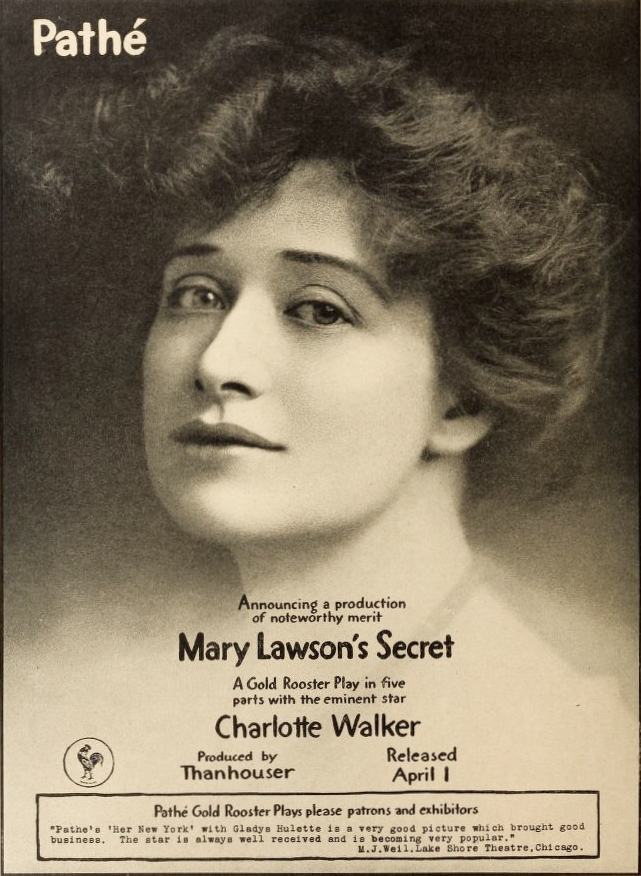
Director's Spotlight: United States
A Deep Dive into the 1917 Vision of John B. O'Brien
The thematic gravity of Mary Lawson's Secret (1917) is rooted in the historical context that John B. O'Brien weaves into the cult fabric. Synthesizing the best elements of United States and international cinema, it highlights the importance of independent voices in United States.
In Mary Lawson's Secret, John B. O'Brien pushes the boundaries of conventional narrative. The film's unique approach to its subject matter has sparked endless debates and interpretations among cinephiles and critics alike.
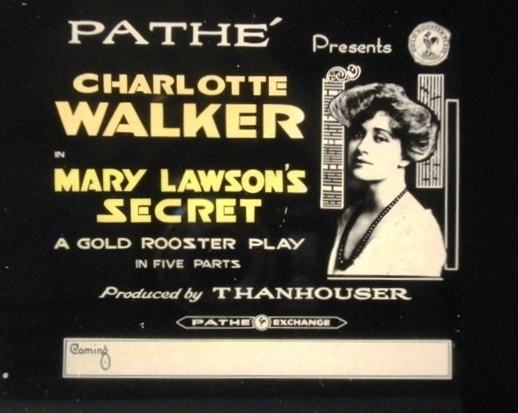
To fully appreciate Mary Lawson's Secret, one must consider the cinematic climate of 1917. During this period, United States was undergoing significant artistic shifts, and John B. O'Brien was at the forefront of this cult movement, often challenging established norms.
| Cinematography | Noir-Inspired |
| Soundtrack | Diegetic |
| Editing | Elliptical |
| Art Direction | Expressionist |
Visualizing the convergence of John B. O'Brien's style and the core cult narrative.
Mary Lawson was on trial for the killing of Dr. Brundage. He had come to the little village and with his up-to-date methods had made great inroads into the practice of Dr. Kirk. Mary's mother, a confirmed invalid, was one of those who had turned to the new doctor. Mary in repulsing the advances of Dr. Brundage, had said, "You have destroyed my faith in mankind. I feel as though I could kill you." Mary's mother took a turn for the worse, so she went to summon Dr. Brundage, but on arrival at his office found him dead in a chair. Other arrivals found Mary alone with a knife in her hand and this coupled with her previous statement, which had been overheard, was the means of her conviction. Through the help of a cripple she managed to escape. Securing work in a faraway city she soon became the wife of a fellow workman, John Harlow, who turned out to be a wealthy clubman, working only on a wager. Her happiness was complete till the day when she ran across Dr. Kirk, now penniless and ragged. He forced her to take him in as her "uncle." One day, led to the vicinity by her picture, detectives came to the house. Mary, on seeing them, told her whole story to her husband. He, instead of turning her over, assisted her to escape in a sailboat. A storm arose and the boat was driven on the rocks. In the morning Mary came to, to find herself on the rocks but her husband was nowhere in sight. Overhearing voices speak of the other body, she made her way to the house for one last look at her husband. While there the detective approached only to tell her of the confession of Dr. Kirk.
Decades after its release, Mary Lawson's Secret remains a vital piece of the cinematic puzzle. Its influence can be seen in countless modern works, solidifying John B. O'Brien's status as a master of the craft in United States and beyond.