
DbcultAccessing Vault...
Director's Spotlight
Senior Film Conservator
Director's Spotlight: United States
A Deep Dive into the 1914 Vision of John Francis Dillon
As we revisit the 1914 masterpiece The Key to Yesterday, we are struck by the meticulous attention to detail that John Francis Dillon applied to every frame. Anchored by a narrative that is both personal and universal, it bridges the gap between traditional cult and contemporary vision.
In The Key to Yesterday, John Francis Dillon pushes the boundaries of conventional narrative. The film's unique approach to its subject matter has sparked endless debates and interpretations among cinephiles and critics alike.
To fully appreciate The Key to Yesterday, one must consider the cinematic climate of 1914. During this period, United States was undergoing significant artistic shifts, and John Francis Dillon was at the forefront of this cult movement, often challenging established norms.
| Cinematography | Static |
| Soundtrack | Experimental |
| Editing | Elliptical |
| Art Direction | Expressionist |
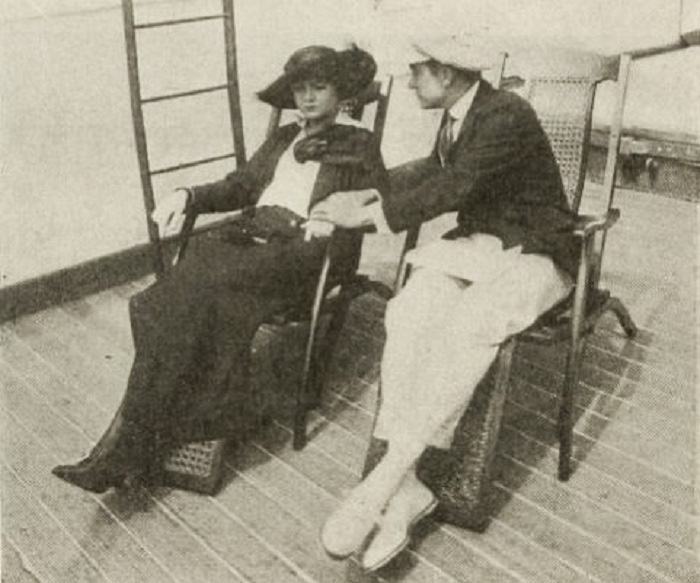
Visualizing the convergence of John Francis Dillon's style and the core cult narrative.
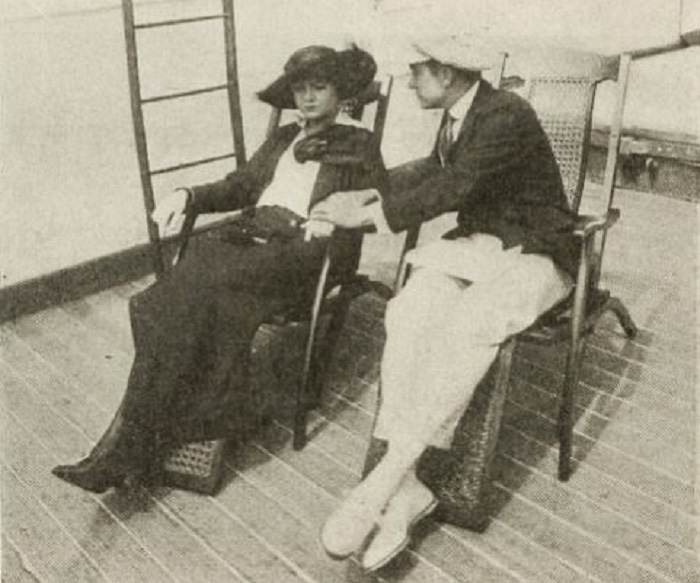
George Carter, a revolutionist in South America, is the exact double of Frederick Marston, a famous artist in Paris. Carter is betrayed by a comrade and is sentenced to be shot. He takes a desperate chance and escapes on board a vessel bound for London. In Paris Marston is stabbed by a model because he does not return her love. The wound incapacitates him from painting, and leaves an ugly scar, and he goes to America on a vacation. Highwaymen attack him, inflicting injuries which cause a total loss of memory. The robbers leave nothing in his pockets but the key to his Paris studio, and Marston adopts the name of Robert Anglo-Saxon. Five years later he falls in love with Duska Filson, a noted beauty, and at a dinner given by her he meets Gen. Robero, a South American ambassador, the man who condemned Carter to death. Robero believes Saxon is Carter and writes Saxon a letter warning him that if he marries Duska he will have Saxon extradited to South America and shot. Robero convinces him that he is Carter and Saxon goes to South America to pay the penalty of the crimes he believes himself guilty of. On the boat he meets Rodman, Carter's betrayer. Duska follows Saxon to South America and learns that Saxon has proven his innocence and departed two days before. She sends him a wireless and he has the ship stopped and lands at Puerto Frio, and learns that the revolution has broken out. In fighting his way through the lines he is shot and is placed on board a vessel bound for France by Rodman. Rodman tells Duska what has occurred and she follows Saxon to France. Saxon's mind clears and through the medium of the key which fits the lock of his house his identity is clearly established. Duska learns that Saxon is the world-renowned artist and his a wife who is very ill. When Saxon reaches his home he finds Duska at the bedside of his wife, who has just died. Duska respects Saxon's grief and departs, with her dream of happiness shattered.
Decades after its release, The Key to Yesterday remains a vital piece of the cinematic puzzle. Its influence can be seen in countless modern works, solidifying John Francis Dillon's status as a master of the craft in United States and beyond.