
DbcultAccessing Vault...
Director's Spotlight
Senior Film Conservator

Director's Spotlight: United States
A Deep Dive into the 1916 Vision of John Gorman
When we examine the cinematic landscape of United States, The Soul of a Child emerges as a landmark work of the enduring legacy of John Gorman's artistic contribution to the genre. Through a lens of existential fatalism and cult tropes, it captures a specific kind of cinematic magic that is rarely replicated.
In The Soul of a Child, John Gorman pushes the boundaries of conventional narrative. The film's unique approach to its subject matter has sparked endless debates and interpretations among cinephiles and critics alike.
The visual language of The Soul of a Child is defined by its use of shadows and framing, a hallmark of John Gorman's style. By utilizing a 1916-era palette, the film creates an immersive experience that perfectly complements its cult themes.
| Cinematography | Static |
| Soundtrack | Experimental |
| Editing | Elliptical |
| Art Direction | Expressionist |
Visualizing the convergence of John Gorman's style and the core cult narrative.
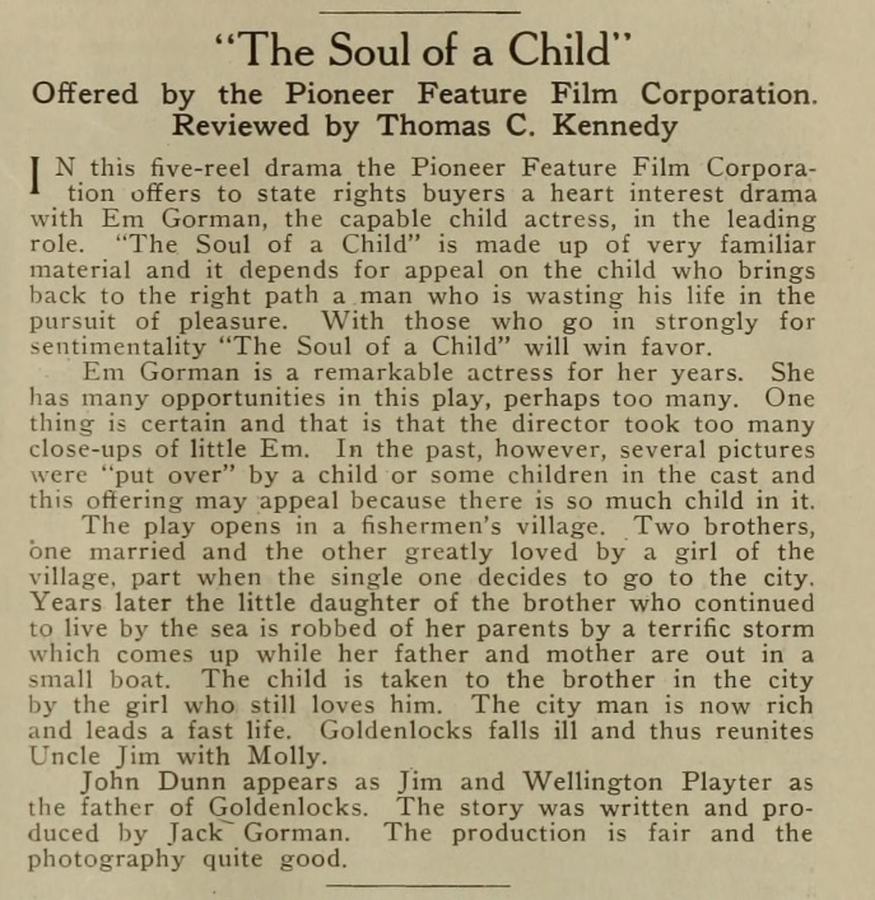
Young Jim leaves his small town for life in the big city. It's not long before he's living the "high life" with fancy friends and partying. When Jim's brother and his wife are killed in a storm, Jim's girlfriend Molly brings Goldenlocks, the couple's young daughter, to the city to live with Jim. However, Jim is having way too much fun to bother looking after a child. and his neglect results in her becoming seriously ill. Complications ensue.
Decades after its release, The Soul of a Child remains a vital piece of the cinematic puzzle. Its influence can be seen in countless modern works, solidifying John Gorman's status as a master of the craft in United States and beyond.