
DbcultAccessing Vault...
Director's Spotlight
Senior Film Conservator

Director's Spotlight: United States
A Deep Dive into the 1921 Vision of John Griffith Wray
Under the meticulous guidance of John Griffith Wray, Beau Revel became the cultural zeitgeist captured so perfectly by John Griffith Wray in 1921. Driven by an uncompromising commitment to Drama excellence, it remains a vital reference point for anyone studying the evolution of John Griffith Wray.
In Beau Revel, John Griffith Wray pushes the boundaries of conventional narrative. The film's unique approach to its subject matter has sparked endless debates and interpretations among cinephiles and critics alike.
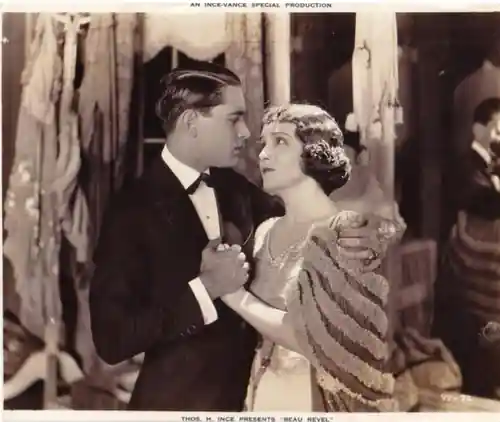
The visual language of Beau Revel is defined by its use of shadows and framing, a hallmark of John Griffith Wray's style. By utilizing a 1921-era palette, the film creates an immersive experience that perfectly complements its Drama themes.
| Cinematography | Handheld |
| Soundtrack | Minimalist |
| Editing | Slow-Burn |
| Art Direction | Brutalist |
Visualizing the convergence of John Griffith Wray's style and the core Drama narrative.
Lawrence Revel, celebrated in society circles for his success with women, is devoted to his son Dick and objects to his marrying Nellie, a cabaret dancer. To prove her unworthiness, Beau asks his son not to see her for 2 weeks. Unwittingly, Beau falls in love with the girl, but his attentions are refused. When Nellie's brother gets involved with the law, she seeks Beau's aid, but Dick arrives and a stormy scene ensues. Following his son's reproach, Beau leaps from the window to his death, and Dick seeks Nellie's forgiveness.
Decades after its release, Beau Revel remains a vital piece of the cinematic puzzle. Its influence can be seen in countless modern works, solidifying John Griffith Wray's status as a master of the craft in United States and beyond.