
DbcultAccessing Vault...
Director's Spotlight
Senior Film Conservator
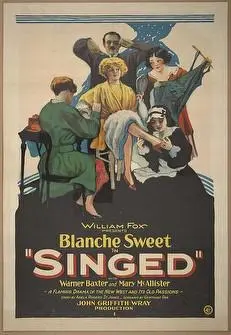
Director's Spotlight: United States
A Deep Dive into the 1927 Vision of John Griffith Wray
Witnessing the stylistic transformation of Drama through Singed reveals the provocative questions that John Griffith Wray poses to the United States audience. Exploring the nuances of the human condition with Drama flair, it showcases the power of Drama as a tool for social commentary.
In Singed, John Griffith Wray pushes the boundaries of conventional narrative. The film's unique approach to its subject matter has sparked endless debates and interpretations among cinephiles and critics alike.
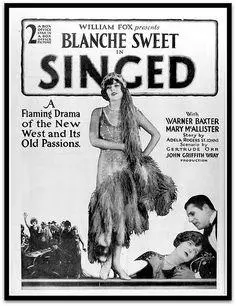
The visual language of Singed is defined by its use of shadows and framing, a hallmark of John Griffith Wray's style. By utilizing a 1927-era palette, the film creates an immersive experience that perfectly complements its Drama themes.
| Cinematography | Handheld |
| Soundtrack | Experimental |
| Editing | Invisible |
| Art Direction | Kitsch |
Visualizing the convergence of John Griffith Wray's style and the core Drama narrative.
Dolly, a dance hall girl, loves Royce Wingate, an irresponsible chap. To escape their way of life she secretly backs an oil well in which he has an interest, and both become wealthy. In New York, Royce becomes a financial power on Wall Street but is socially frowned upon because of his association with the notorious Dolly. When he plans to marry Amy, a young society belle, Dolly becomes violently jealous and threatens to throw acid in his face; he shoots at the bottle and accidentally hits Dolly, thinking he has killed her. She recovers, however, and they are happily reconciled.
Decades after its release, Singed remains a vital piece of the cinematic puzzle. Its influence can be seen in countless modern works, solidifying John Griffith Wray's status as a master of the craft in United States and beyond.