
DbcultAccessing Vault...
Director's Spotlight
Senior Film Conservator

Director's Spotlight: United States
A Deep Dive into the 1929 Vision of John Griffith Wray
Few works in United States cinema carry the same weight as The Careless Age, especially regarding the cultural zeitgeist captured so perfectly by John Griffith Wray in 1929. Utilizing a 1929-specific aesthetic that remains timeless, it serves as a blueprint for future generations of Drama directors.
In The Careless Age, John Griffith Wray pushes the boundaries of conventional narrative. The film's unique approach to its subject matter has sparked endless debates and interpretations among cinephiles and critics alike.
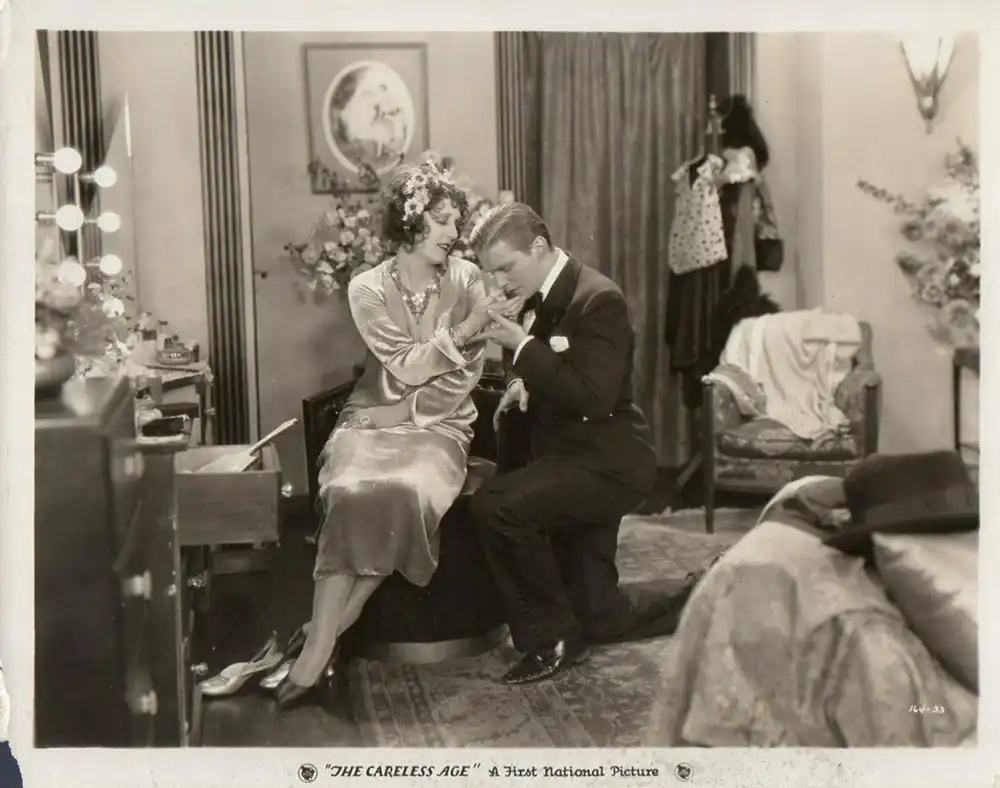
While deeply rooted in United States, The Careless Age has achieved a global reach, influencing directors from various backgrounds. Its ability to translate Drama tropes into a universal cinematic language is why it remains a cult staple decades after its 1929 release.
| Cinematography | High-Contrast |
| Soundtrack | Minimalist |
| Editing | Disjunctive |
| Art Direction | Baroque |
Visualizing the convergence of John Griffith Wray's style and the core Drama narrative.
Sir John Hayward, a noted surgeon, decides that his son Wyn, a medical student, needs a vacation as a temporary diversion from his studies. At Como, Wyn meets and falls in love with Rayetta Muir, an unprincipled actress who trifles with him. In London, Rayetta avoids seeing Wyn, ready to forget him. Wyn is crazed when he learns that Rayetta is intimate with both Lord Durhugh, an old roué, and Le Grand, a French boxer; and in a rage he chokes Rayetta and leaves her for dead. He then confesses to his father that he has killed her. Preparing to take the blame, Sir John, accompanied by Wyn, goes to Rayetta's apartment to find that she did not die after all.
Decades after its release, The Careless Age remains a vital piece of the cinematic puzzle. Its influence can be seen in countless modern works, solidifying John Griffith Wray's status as a master of the craft in United States and beyond.