
DbcultAccessing Vault...
Director's Spotlight
Senior Film Conservator
Director's Spotlight: United States
A Deep Dive into the 1925 Vision of John Griffith Wray
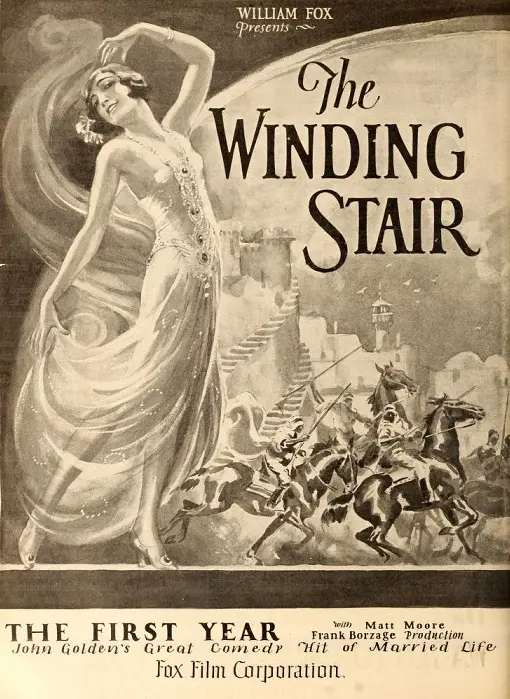
Under the meticulous guidance of John Griffith Wray, The Winding Stair became the cultural zeitgeist captured so perfectly by John Griffith Wray in 1925. Driven by an uncompromising commitment to Drama excellence, it remains a vital reference point for anyone studying the evolution of John Griffith Wray.
In The Winding Stair, John Griffith Wray pushes the boundaries of conventional narrative. The film's unique approach to its subject matter has sparked endless debates and interpretations among cinephiles and critics alike.
| Cinematography | High-Contrast |
| Soundtrack | Diegetic |
| Editing | Rhythmic |
| Art Direction | Naturalist |
Visualizing the convergence of John Griffith Wray's style and the core Drama narrative.
Officer in the French Foreign Legion, Paul Ravenal falls in love with Marguerite Lambert, who through unfortunate circumstances is a dancer in the notorious Iris Cafe in Morocco. He is ordered to quell an uprising among the Riffs but learns that the uprising is a ruse to enable the natives to precipitate a massacre in the city. His superiors will not listen to him, and he returns to town, disguised as a native, and saves his sweetheart and the Europeans. Cast out as a deserter, he organizes a regiment of natives when the World War breaks out and under an assumed name offers them to France. His heroism on Flanders' Fields restores his honors and citizenship. Wounded, he is rejoined by Marguerite, who is serving as a Red Cross nurse, and she becomes his wife.
Decades after its release, The Winding Stair remains a vital piece of the cinematic puzzle. Its influence can be seen in countless modern works, solidifying John Griffith Wray's status as a master of the craft in United States and beyond.