
DbcultAccessing Vault...
Director's Spotlight
Senior Film Conservator

Director's Spotlight: United States
A Deep Dive into the 1917 Vision of John H. Collins
Few works in United States cinema carry the same weight as God's Law and Man's, especially regarding the technical innovation that John H. Collins introduced to the cult format. Subverting the expectations of the typical 1917 audience, it bridges the gap between traditional cult and contemporary vision.
In God's Law and Man's, John H. Collins pushes the boundaries of conventional narrative. The film's unique approach to its subject matter has sparked endless debates and interpretations among cinephiles and critics alike.
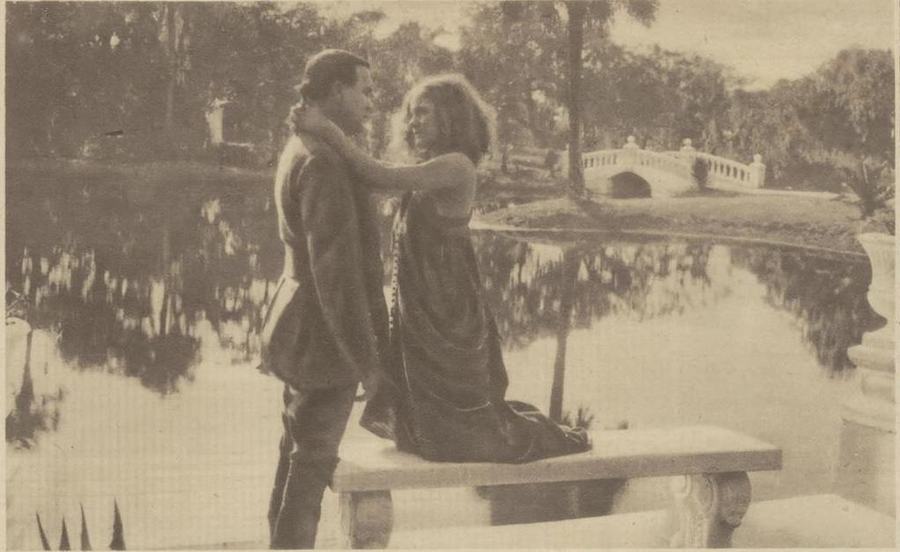
The visual language of God's Law and Man's is defined by its use of shadows and framing, a hallmark of John H. Collins's style. By utilizing a 1917-era palette, the film creates an immersive experience that perfectly complements its cult themes.
| Cinematography | High-Contrast |
| Soundtrack | Synth-Heavy |
| Editing | Rhythmic |
| Art Direction | Naturalist |
Visualizing the convergence of John H. Collins's style and the core cult narrative.
Dr. Claude Drummond, a young English doctor in India, saves Ameia, a young girl, from being sacrificed to the priests of the temple of Krishna by buying her as his wife. Returning to England upon the death of his elder brother, who was the heir to the estate, Claude finds that his father has arranged a marriage between himself and Olive Dennison, the daughter of the Major-General. To please his father, Claude is about to submit to the marriage, although neither he nor Olive love each other, when Ameia arrives from India. Discovering that her existence is a barrier to her husband's advantageous alliance, Ameia takes poison but is saved by an antidote administered by Claude. It is then discovered that Ameia is actually the daughter of Major-General Dennison, by a native wife whom he had deserted. Thus, Claude finds it possible to be true to his love and to his father's wish that he marry the general's daughter.
Decades after its release, God's Law and Man's remains a vital piece of the cinematic puzzle. Its influence can be seen in countless modern works, solidifying John H. Collins's status as a master of the craft in United States and beyond.