
DbcultAccessing Vault...
Director's Spotlight
Senior Film Conservator
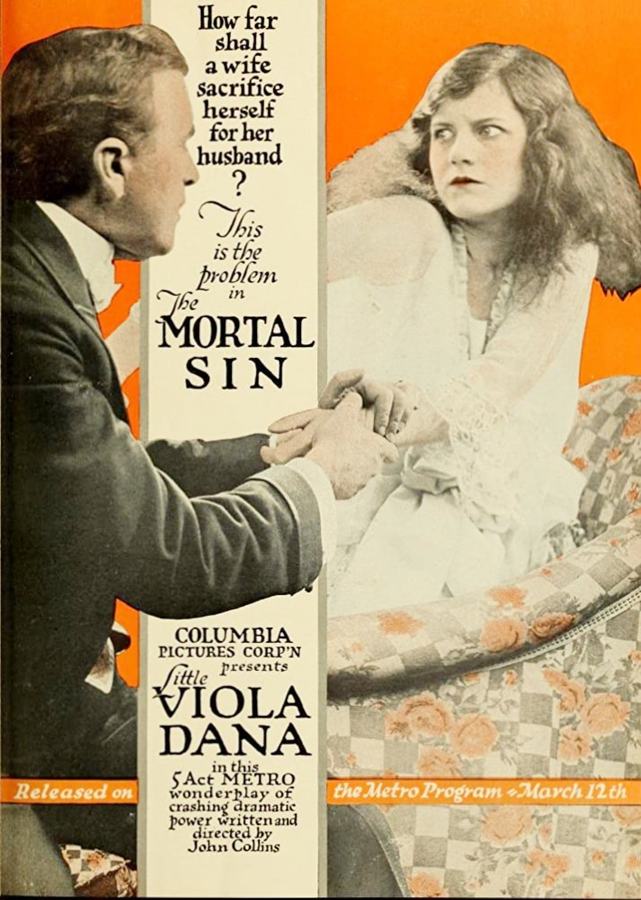
Director's Spotlight: United States
A Deep Dive into the 1917 Vision of John H. Collins
Peeling back the layers of John H. Collins's The Mortal Sin exposes the technical innovation that John H. Collins introduced to the cult format. Driven by an uncompromising commitment to cult excellence, it stands as the definitive 1917 statement on cult identity.
In The Mortal Sin, John H. Collins pushes the boundaries of conventional narrative. The film's unique approach to its subject matter has sparked endless debates and interpretations among cinephiles and critics alike.
| Cinematography | Static |
| Soundtrack | Diegetic |
| Editing | Elliptical |
| Art Direction | Expressionist |
Visualizing the convergence of John H. Collins's style and the core cult narrative.
George Anderson, a struggling author, works in the daytime as a clerk in the office of Emmet Standish, the publisher, and at night writes on his novel, "The Mortal Sin." "The Mortal Sin" deals with a wife's sacrifice of her honor in order to enable her sick husband to go to a western sanitarium to ward of the tuberculosis which threatens him. The husband, returning unexpectedly, learns the truth, but forgives his wife when he realizes that her sacrifice was made for him. Anderson plods on at his writing. His wife worries over his weakened condition. The doctor tells him that a trip to the west is the only thing that will save him. Worrying over this, he continues to work feverishly, but he collapses, and is obliged to leave at once. In order to make both ends meet, since he has saved only enough to pay his railroad fare, Jane goes to take her husband's place in Standish's office. The publisher is considerate of her, and she is encouraged to show him her husband's novel and ask him to publish it. Standish says that it is untrue to life, since no man would forgive his wife for having been unfaithful to him, no matter what her motive. Standish refuses to publish the novel, but tells Jane that she need not depend on the sale of her husband's book for money. In anger she leaves his employ. She tries to place the novel with other publishers, but fails, and poses for Rambeau, the artist, for his painting of the Madonna. When the work is over she takes refuge in a cheap lodging house where Standish finds her. Letters from her husband indicate that he is in actual need. He is too ill to do any work, and thinking that Jane is still in Standish's employ, he appeals to her for money. She makes a bargain with Standish. She will go with him to his home if he will accept her husband's novel. He accepts and Jane changes the ending of the book in order to make it salable. The husband of the story, returning, kills his unfaithful wife. The book is printed and has a phenomenal sale, and Jane sends regular remittances to her husband. Another publishing house make Anderson an offer for his next novel, and having regained his health he decides to return east and give his wife a surprise. He goes to the address she has given and asks for Mrs. Anderson. The maid says she knows no Mrs. Anderson, but that Mrs. Standish is at home. Suspicious, Anderson hides and watches developments. Standish returns from his club to escort Jane to a party, but she asks to be excused. He rebukes her and leaves the room angrily. Anderson leaps from his hiding place and upbraids his wife for her infidelity. She tells him that her desire to aid him has been her only motive, and that she still loves him. Anderson will not listen to her pleadings, but rushes forward, grapples with her and deliberately chokes her to death in cold blood. Anderson is led away to a cell, tried and sentenced to die. As he is being led to the death house the chaplain shakes and arouses him, and Anderson, waking up, sees his wife bending over him. He has been asleep and incidents connected with "The Mortal Sin" have woven themselves into his dreams. He puts away the novel, promising Jane to conserve his health in the future so that no such events as those contained in his dream can come to pass.
Decades after its release, The Mortal Sin remains a vital piece of the cinematic puzzle. Its influence can be seen in countless modern works, solidifying John H. Collins's status as a master of the craft in United States and beyond.