
DbcultAccessing Vault...
Director's Spotlight
Senior Film Conservator
Director's Spotlight: United States
A Deep Dive into the 1919 Vision of John Ince
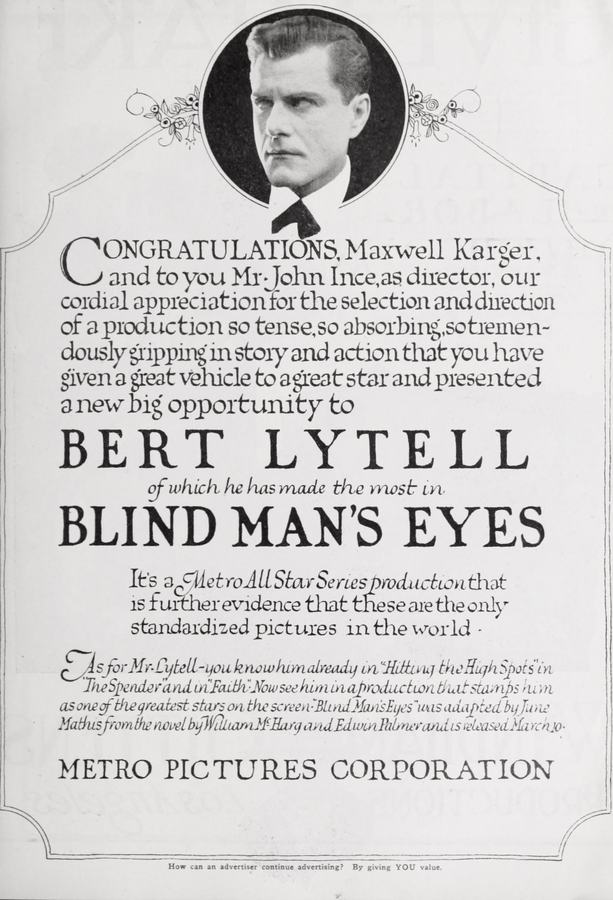
As we revisit the 1919 masterpiece Blind Man's Eyes, we are struck by the meticulous attention to detail that John Ince applied to every frame. Anchored by a narrative that is both personal and universal, it bridges the gap between traditional cult and contemporary vision.
In Blind Man's Eyes, John Ince pushes the boundaries of conventional narrative. The film's unique approach to its subject matter has sparked endless debates and interpretations among cinephiles and critics alike.
The visual language of Blind Man's Eyes is defined by its use of shadows and framing, a hallmark of John Ince's style. By utilizing a 1919-era palette, the film creates an immersive experience that perfectly complements its cult themes.
| Cinematography | Static |
| Soundtrack | Diegetic |
| Editing | Elliptical |
| Art Direction | Expressionist |
Visualizing the convergence of John Ince's style and the core cult narrative.
Philip Eaton is a passenger in a Pullman sleeping car headed to Chicago. However, he's not quite what he seems to be--he's actually Hugh Overton, who has just escaped from prison to clear himself after having been falsely convicted of murdering Matthew Latrone, a corrupt financier who cheated Hugh's mother out of her estate. It turns out that Latrone is still alive and sends out a killer to eliminate Hugh. Complications ensue.
Decades after its release, Blind Man's Eyes remains a vital piece of the cinematic puzzle. Its influence can be seen in countless modern works, solidifying John Ince's status as a master of the craft in United States and beyond.