
DbcultAccessing Vault...
Director's Spotlight
Senior Film Conservator
Director's Spotlight: United States
A Deep Dive into the 1931 Vision of John R. McCrory
The thematic gravity of Buster Bear (1931) is rooted in the historical context that John R. McCrory weaves into the Animation fabric. Synthesizing the best elements of United States and international cinema, it highlights the importance of independent voices in United States.
In Buster Bear, John R. McCrory pushes the boundaries of conventional narrative. The film's unique approach to its subject matter has sparked endless debates and interpretations among cinephiles and critics alike.
In this work, John R. McCrory explores the intersection of Animation and United States cultural identity. The meticulous attention to detail suggests a deep-seated commitment to pushing the boundaries of the medium, ensuring that Buster Bear remains a relevant topic of study for Animation enthusiasts.
| Cinematography | Deep Focus |
| Soundtrack | Synth-Heavy |
| Editing | Disjunctive |
| Art Direction | Baroque |
Visualizing the convergence of John R. McCrory's style and the core Animation narrative.
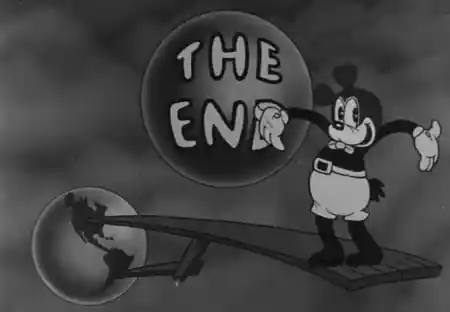
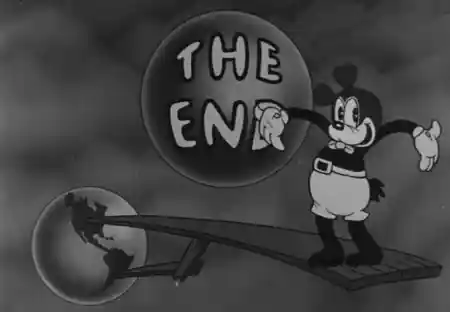
Buster Bear opens the cartoon by walking up to the would-be Looney Tunes sign, greeting the audience with "Hi ya! Hello everybody!" Before doing a little dance as congratulatory music plays. The feature then opens to a cat driving a large truck that says "The Buster Bear Carnival". The cat rings a bell as dogs and other cats run alongside the truck. A pair of pig twins are chasing the truck, one on a unicycle and one on foot. The one on the unicycle bears a strong resemblance to future Looney Tunes star Piggy, who was created by Rudolph Ising. He reads a newspaper and then tips his hat to the viewer. Buster Bear is waiting for the animals at town hall. He is their sheriff and M.C. for the event. He goes from having a high-pitched voice to a deep one when he bullies a dancing broom and dustpan, then he returns to dancing. Dancing frogs, a dancing cow and a mother bear with three cubs soon follow Buster into the hall for the show. Buster introduces a duck couple who dance, make out and then perform a stunt. With each act he introduces, his pants droop. The next act is of a stork using a newborn pup to play xylophone with his wings, but the crowd disapproves and a hook pulls the stork apart. Various other animals play instruments during and after the segment to keep the crowd entertained. The next act is a horse jumping rope, which the crowd applauds. The final act is a dog blacksmith, hitting a horseshoe on an anvil, but the weight of the dog and the anvil are too much, and they fall through the stage. Delirious, he hits a major pipe, flooding the town hall and the iris closes on all the animals escaping Town Hall. The short ends with Buster wearing heavy eye shadow and saying "I'll be seeing ya!" on a ledge built from the planet Earth as beautiful clouds and stars pass by.
Decades after its release, Buster Bear remains a vital piece of the cinematic puzzle. Its influence can be seen in countless modern works, solidifying John R. McCrory's status as a master of the craft in United States and beyond.