
DbcultAccessing Vault...
Director's Spotlight
Senior Film Conservator
Director's Spotlight: United States
A Deep Dive into the 1922 Vision of Joseph De Grasse
As we revisit the 1922 masterpiece A Tailor-Made Man, we are struck by the atmospheric immersion that Joseph De Grasse achieves throughout A Tailor-Made Man. Exploring the nuances of the human condition with Comedy flair, it solidifies Joseph De Grasse's reputation as a master of the craft.
In A Tailor-Made Man, Joseph De Grasse pushes the boundaries of conventional narrative. The film's unique approach to its subject matter has sparked endless debates and interpretations among cinephiles and critics alike.
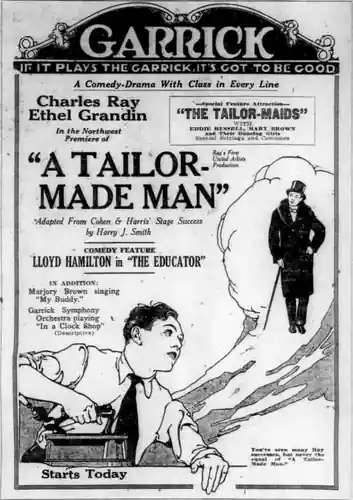
The visual language of A Tailor-Made Man is defined by its use of shadows and framing, a hallmark of Joseph De Grasse's style. By utilizing a 1922-era palette, the film creates an immersive experience that perfectly complements its Comedy themes.
| Cinematography | Deep Focus |
| Soundtrack | Minimalist |
| Editing | Slow-Burn |
| Art Direction | Brutalist |
Visualizing the convergence of Joseph De Grasse's style and the core Comedy narrative.
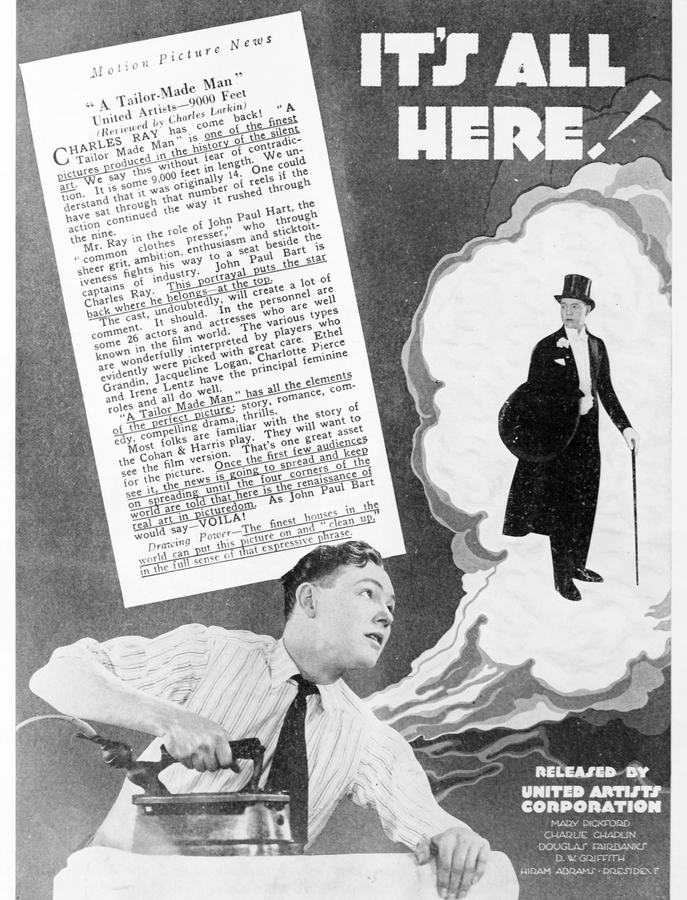
John Paul Bart, a presser who has high respect for the favorable impression created by expensive clothes, "borrows" a suit to wear to an exclusive reception. There he attracts the attention of shipping magnate Abraham Nathan, who hires John Paul to handle his company's labor problems. Against great odds and despite Gustavus Sonntag's scheming, John Paul is successful, but he returns to Anton Huber's shop when he is exposed by Sonntag. Nathan, however, finds him and gives him a permanent position, and John Paul then marries Tanya Huber.
Decades after its release, A Tailor-Made Man remains a vital piece of the cinematic puzzle. Its influence can be seen in countless modern works, solidifying Joseph De Grasse's status as a master of the craft in United States and beyond.