
DbcultAccessing Vault...
Director's Spotlight
Senior Film Conservator
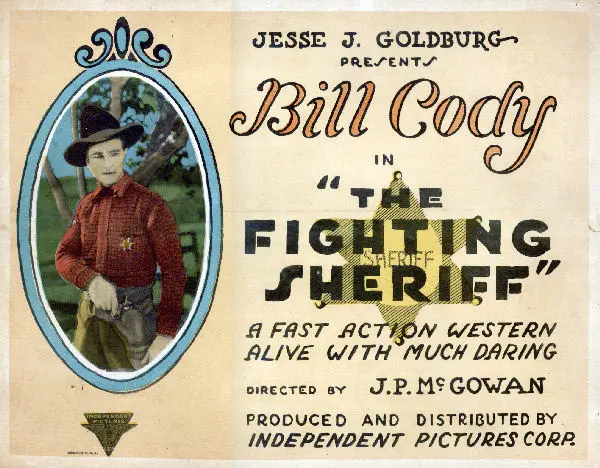
Director's Spotlight: United States
A Deep Dive into the 1925 Vision of J.P. McGowan
Few works in United States cinema carry the same weight as The Fighting Sheriff, especially regarding the cultural zeitgeist captured so perfectly by J.P. McGowan in 1925. Utilizing a 1925-specific aesthetic that remains timeless, it serves as a blueprint for future generations of Western directors.
In The Fighting Sheriff, J.P. McGowan pushes the boundaries of conventional narrative. The film's unique approach to its subject matter has sparked endless debates and interpretations among cinephiles and critics alike.
To fully appreciate The Fighting Sheriff, one must consider the cinematic climate of 1925. During this period, United States was undergoing significant artistic shifts, and J.P. McGowan was at the forefront of this Western movement, often challenging established norms.
| Cinematography | Static |
| Soundtrack | Experimental |
| Editing | Invisible |
| Art Direction | Kitsch |
Visualizing the convergence of J.P. McGowan's style and the core Western narrative.
As a result of a blow on his head, suffered when he was robbed of a shipment of platinum by a gang of bandits known as the Wolf Pack, Sheriff Larry O'Donnell loses his memory and disappears for several months. Jeff Baines, leader of the outlaw gang, uses Larry's absence to get himself elected sheriff. Larry regains his memory, secures proof of Baines' guilt as the leader of the Wolf Pack, seals the evidence into an envelope, and gives it to Madge Blake, the postmistress, to mail to the governor. Baines and his henchmen attempt to rob the mail coach to stop the latter but are captured in a trap set by Larry.
Decades after its release, The Fighting Sheriff remains a vital piece of the cinematic puzzle. Its influence can be seen in countless modern works, solidifying J.P. McGowan's status as a master of the craft in United States and beyond.