
DbcultAccessing Vault...
Director's Spotlight
Senior Film Conservator
Director's Spotlight: United States
A Deep Dive into the 1919 Vision of King Vidor
Exploring the cult underpinnings of The Turn in the Road leads us to the uncompromising vision of King Vidor that defines this cult masterpiece. Melding the raw energy of United States with a global cult appeal, it echoes the profound changes occurring in United States during that era.
In The Turn in the Road, King Vidor pushes the boundaries of conventional narrative. The film's unique approach to its subject matter has sparked endless debates and interpretations among cinephiles and critics alike.
To fully appreciate The Turn in the Road, one must consider the cinematic climate of 1919. During this period, United States was undergoing significant artistic shifts, and King Vidor was at the forefront of this cult movement, often challenging established norms.
| Cinematography | Deep Focus |
| Soundtrack | Minimalist |
| Editing | Slow-Burn |
| Art Direction | Brutalist |
Visualizing the convergence of King Vidor's style and the core cult narrative.
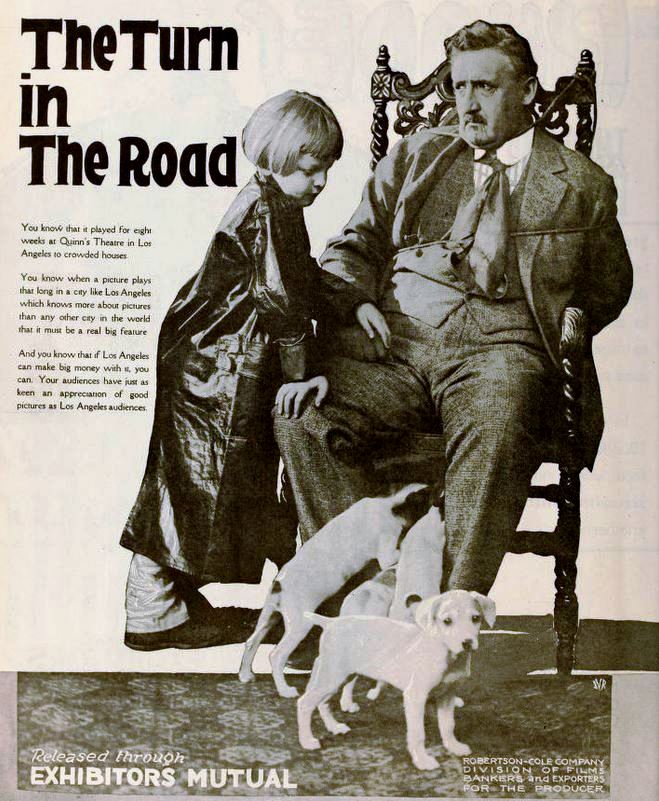
Paul Perry, the son of Perryville's wealthiest citizen, marries Reverend Matthew Barker's younger daughter Evelyn, while her sister June, who disputes her father's sermons preaching that it is God's will that sends affliction, hides her own love for Paul. When Evelyn dies in childbirth, Paul nearly goes insane. His questions to Reverend Barker about God's role in Evelyn's death shake Barker's faith. Barker's new sermons, focusing on God's love, arouse his wealthy congregation to dismiss him. Meanwhile, Paul searches for God's truth but becomes a derelict in Chicago. June takes Paul's child Bob to Chicago, but returns after being fired for refusing her employer's advances. Paul's father Hamilton, who denies wage increases at his iron works, is about to be shot by his employees, when Bob, now six, visits with his six puppies. His lovable nature subdues the workers, and Hamilton, also softened, complies with their requests. After Paul returns and learns that Bob, whose philosophy of love has touched him, is his own son, his happiness returns.
Decades after its release, The Turn in the Road remains a vital piece of the cinematic puzzle. Its influence can be seen in countless modern works, solidifying King Vidor's status as a master of the craft in United States and beyond.