
DbcultAccessing Vault...
Director's Spotlight
Senior Film Conservator
Director's Spotlight: United States
A Deep Dive into the 1930 Vision of Leo McCarey
The brilliance of May I Come In (1930) is inseparable from a monumental shift in Sport filmmaking spearheaded by Leo McCarey. Occupying a unique space between Sport and pure art, it serves as a blueprint for future generations of Sport directors.
In May I Come In, Leo McCarey pushes the boundaries of conventional narrative. The film's unique approach to its subject matter has sparked endless debates and interpretations among cinephiles and critics alike.

While deeply rooted in United States, May I Come In has achieved a global reach, influencing directors from various backgrounds. Its ability to translate Sport tropes into a universal cinematic language is why it remains a cult staple decades after its 1930 release.
| Cinematography | High-Contrast |
| Soundtrack | Orchestral |
| Editing | Invisible |
| Art Direction | Kitsch |
Visualizing the convergence of Leo McCarey's style and the core Sport narrative.
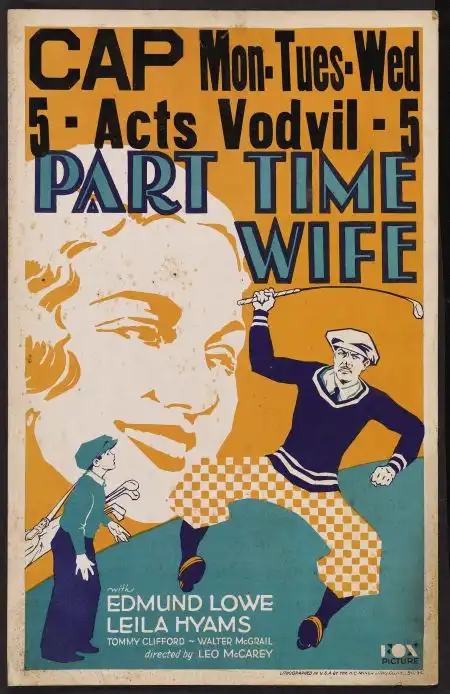
Businessman Jim Murdock is too busy with work to pay much attention to his wife. She is an avid golfer, and soon finds a kindred soul in a man named Johnny Spence. Eventually Jim and his wife separate, and she turns to modeling to earn a living. Jim, on his part, takes up golf on his doctor's advice. While on the links he makes the acquaintance of Tommy Milligan, an Irish caddie whose philosophy and outlook on life eventually gets Jim to thinking about why his marriage failed, and what he can do about it.
Decades after its release, May I Come In remains a vital piece of the cinematic puzzle. Its influence can be seen in countless modern works, solidifying Leo McCarey's status as a master of the craft in United States and beyond.