
DbcultAccessing Vault...
Director's Spotlight
Senior Film Conservator
Director's Spotlight: United States
A Deep Dive into the 1926 Vision of Lewis H. Moomaw
Analyzing Flames (1926) requires a deep dive into the unique directorial voice that Lewis H. Moomaw brought to the screen. By challenging the status quo of 1926 cinema, it continues to spark endless debates among critics and cinephiles alike.
In Flames, Lewis H. Moomaw pushes the boundaries of conventional narrative. The film's unique approach to its subject matter has sparked endless debates and interpretations among cinephiles and critics alike.
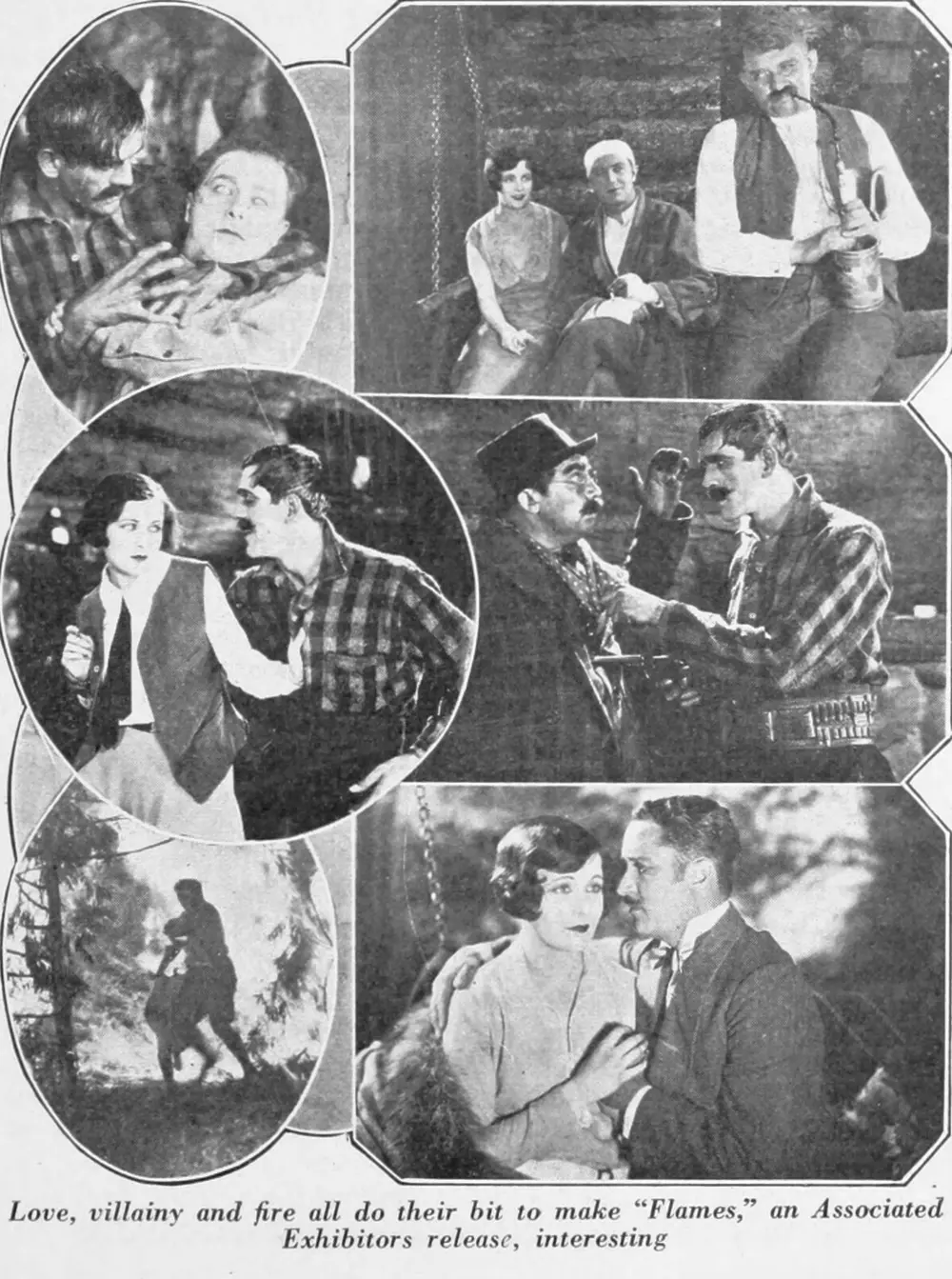
The visual language of Flames is defined by its use of shadows and framing, a hallmark of Lewis H. Moomaw's style. By utilizing a 1926-era palette, the film creates an immersive experience that perfectly complements its Drama themes.
| Cinematography | Noir-Inspired |
| Soundtrack | Diegetic |
| Editing | Rhythmic |
| Art Direction | Naturalist |
Visualizing the convergence of Lewis H. Moomaw's style and the core Drama narrative.
Herbert Landis, who secretly loves Anne Travers, is sent by her father to supervise construction of a bridge in Oregon. Anne insists that society man Hilary Fenton join the party, and as a result Landis broods in his cabin, which he shares with his foreman Ole Bergson. Ole, who claims to know all about love, disguises himself as well-known desperado Blackie Blanchette and kidnaps Anne, leaving a note urging Landis to "rescue" her; however, Ole is captured by the real Blackie. While a raging forest fire breaks out, Landis rides to the cabin and confronts Blackie; as the fire reaches the cabin, Blackie meets a fiery death while Landis and Anne stagger through the flames to the river. The other suitor, finding country customs too rough, departs, leaving Anne to discover her true love.
Decades after its release, Flames remains a vital piece of the cinematic puzzle. Its influence can be seen in countless modern works, solidifying Lewis H. Moomaw's status as a master of the craft in United States and beyond.