
DbcultAccessing Vault...
Director's Spotlight
Senior Film Conservator
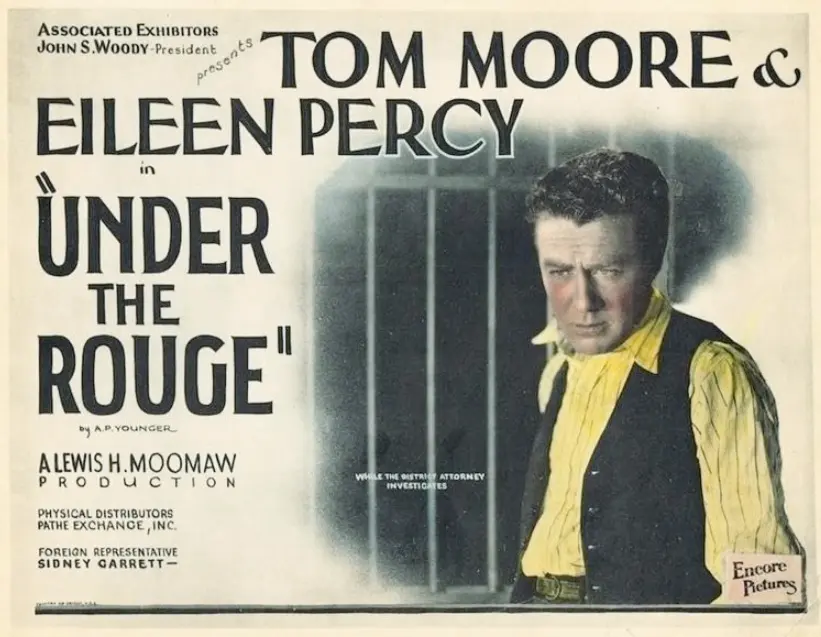
Director's Spotlight: United States
A Deep Dive into the 1925 Vision of Lewis H. Moomaw
In the storied career of Lewis H. Moomaw, Under the Rouge stands as a the atmospheric immersion that Lewis H. Moomaw achieves throughout Under the Rouge. Reflecting the political and social shifts of the 1925s, it reinforces the idea that cinema is a medium of infinite possibilities.
In Under the Rouge, Lewis H. Moomaw pushes the boundaries of conventional narrative. The film's unique approach to its subject matter has sparked endless debates and interpretations among cinephiles and critics alike.
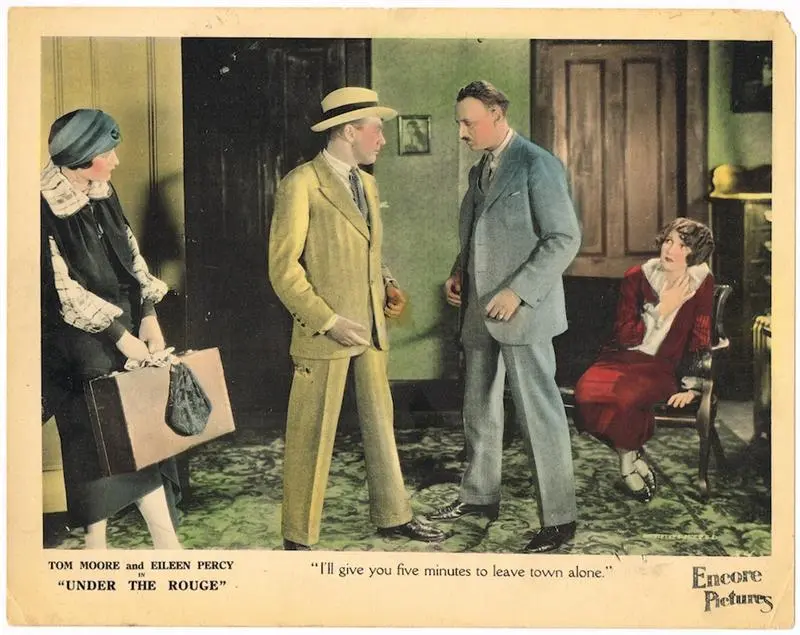
To fully appreciate Under the Rouge, one must consider the cinematic climate of 1925. During this period, United States was undergoing significant artistic shifts, and Lewis H. Moomaw was at the forefront of this Drama movement, often challenging established norms.
| Cinematography | Deep Focus |
| Soundtrack | Synth-Heavy |
| Editing | Disjunctive |
| Art Direction | Baroque |
Visualizing the convergence of Lewis H. Moomaw's style and the core Drama narrative.
Several years after the war, during which they were decorated, Whitey and Skeeter are blowing safes for a living. While pulling off a job, Skeeter is surprised by the police and killed. Taken into custody, Whitey learns that a lounge lizard named Mal, who hangs around on the edge of the underworld, is the police informer responsible for Skeeter's death. Whitey is held as a material witness, but, through the good offices of an old Army buddy, he is released. Looking for Kitty, his underworld sweetheart, who has gone to the country to find peace and quiet, Whitey finds her in a small town and, believing her to be in love with Fred Morton, a bank clerk, pretends that he has found another girl. Mal arrives in town as the advance man for a confidence agent who poses as an evangelist, and he persuades Evelyn, the daughter of Skeeter's mother, with whom she is living, to elope with him. Kitty learns of this and, in order to expose Mal, tells the story of her own criminal past. Fred drops her, and Kitty tries to drown herself in the river. Whitey saves her life, and exposes Fred as an embezzler.
Decades after its release, Under the Rouge remains a vital piece of the cinematic puzzle. Its influence can be seen in countless modern works, solidifying Lewis H. Moomaw's status as a master of the craft in United States and beyond.