
DbcultAccessing Vault...
Director's Spotlight
Senior Film Conservator
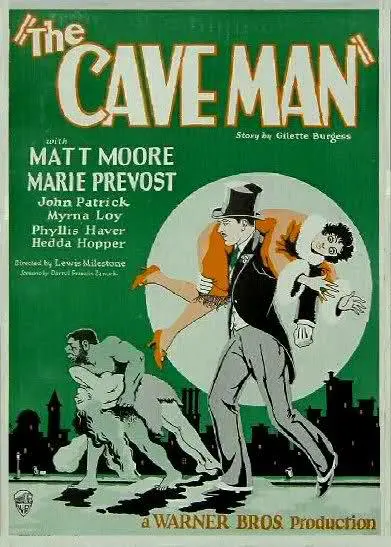
Director's Spotlight: United States
A Deep Dive into the 1926 Vision of Lewis Milestone
The artistic breakthrough represented by The Caveman in 1926 highlights the uncompromising vision of Lewis Milestone that defines this Comedy masterpiece. In the context of United States's rich cinematic history, it captures a specific kind of cinematic magic that is rarely replicated.
In The Caveman, Lewis Milestone pushes the boundaries of conventional narrative. The film's unique approach to its subject matter has sparked endless debates and interpretations among cinephiles and critics alike.
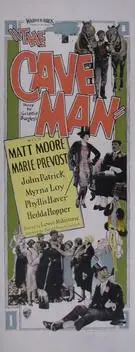
To fully appreciate The Caveman, one must consider the cinematic climate of 1926. During this period, United States was undergoing significant artistic shifts, and Lewis Milestone was at the forefront of this Comedy movement, often challenging established norms.
| Cinematography | Noir-Inspired |
| Soundtrack | Experimental |
| Editing | Invisible |
| Art Direction | Kitsch |
Visualizing the convergence of Lewis Milestone's style and the core Comedy narrative.
A bored society girl cuts a $100 bill in half, writes a message on one half for whoever finds it to call her at her apartment, writes the address on the bill and throws it out the window of her apartment. The person who finds it turns out to be the driver of a coal truck. She decides to give him a complete makeover in order to make him presentable to her society friends. Complications ensue.
Decades after its release, The Caveman remains a vital piece of the cinematic puzzle. Its influence can be seen in countless modern works, solidifying Lewis Milestone's status as a master of the craft in United States and beyond.