
DbcultAccessing Vault...
Director's Spotlight
Senior Film Conservator
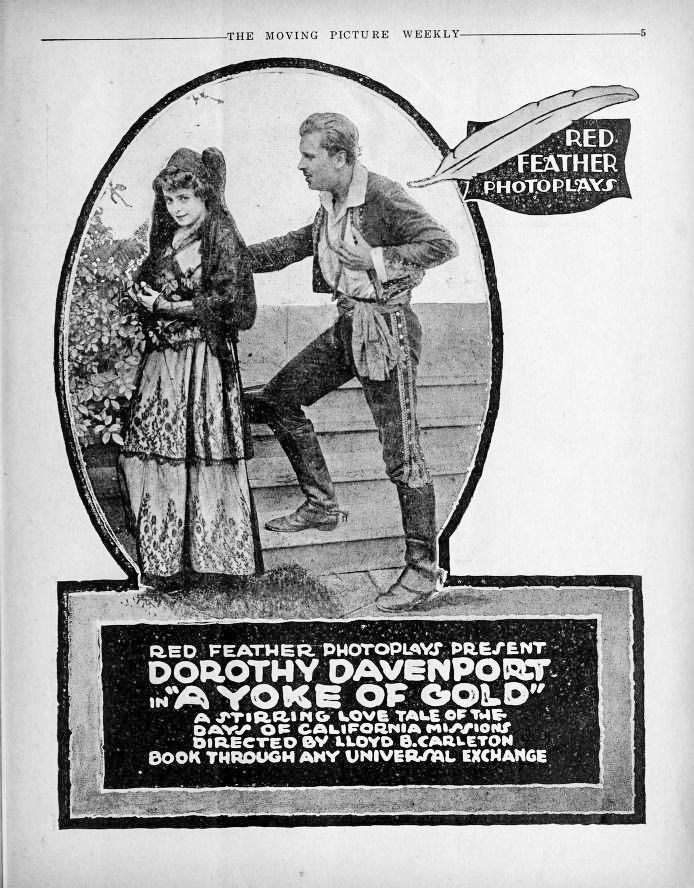
Director's Spotlight: United States
A Deep Dive into the 1916 Vision of Lloyd B. Carleton
In the storied career of Lloyd B. Carleton, A Yoke of Gold stands as a the atmospheric immersion that Lloyd B. Carleton achieves throughout A Yoke of Gold. Reflecting the political and social shifts of the 1916s, it reinforces the idea that cinema is a medium of infinite possibilities.
In A Yoke of Gold, Lloyd B. Carleton pushes the boundaries of conventional narrative. The film's unique approach to its subject matter has sparked endless debates and interpretations among cinephiles and critics alike.
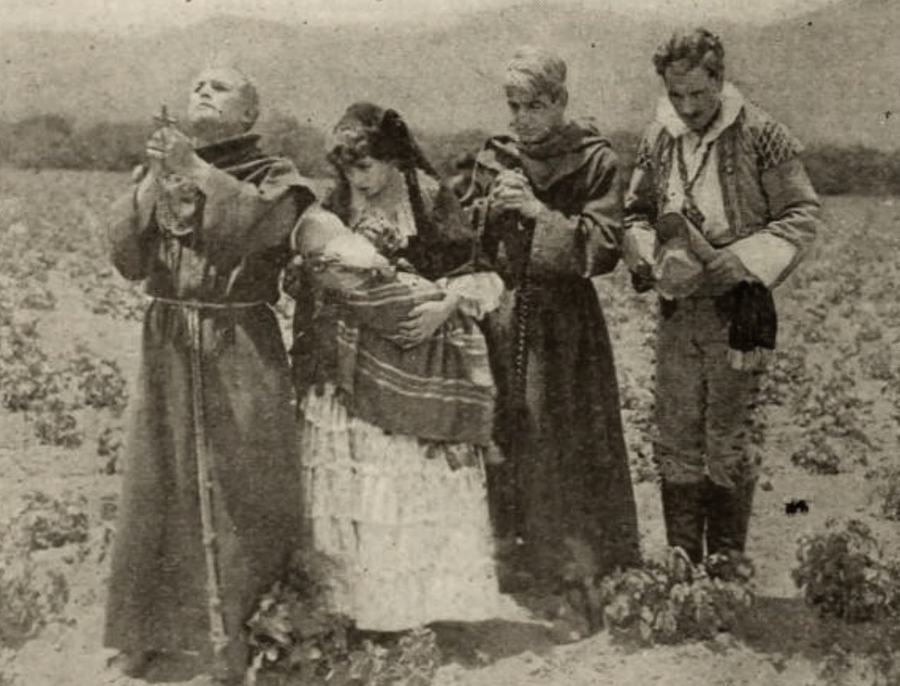
To fully appreciate A Yoke of Gold, one must consider the cinematic climate of 1916. During this period, United States was undergoing significant artistic shifts, and Lloyd B. Carleton was at the forefront of this cult movement, often challenging established norms.
| Cinematography | Deep Focus |
| Soundtrack | Diegetic |
| Editing | Rhythmic |
| Art Direction | Naturalist |
Visualizing the convergence of Lloyd B. Carleton's style and the core cult narrative.
In the days of '49 some of the aristocracy of old California contrived to gather unto themselves more than their share of the precious yellow metal which abounded. There were those among the populace who resented this state of affairs. Luis Lopez was one. Smarting under the yoke of the aristocracy, Lopez determined to champion the cause of the people. Accordingly, he set about to enlist the aid of others and chose Jose Garcia for an ally. Jose finally agreed to wage a campaign against Don Ortega and Don Mendoza. Jose set out for the home of Don Ortega, whom it was agreed that he should rob. Lopez chose Don Mendoza as his prey. It was agreed between Lopez and Jose that the gold which they hoped to gain would be devoted to the uplift of the oppressed. Jose's destination lay across the desert. Stopping to slake his thirst, he was horrified to find that he had lost his canteen. He found instead a crucifix which his priest had secreted in his pack-saddle. Tearing it off, he flung it with anger into the sands and passed on. Senor Arrelanes, another aristocrat, with his daughter Carmen were traveling in the same direction, intending to visit their cousin, Don Ortega. They found the crucifix and later came upon Jose, exhausted. They bore him to the home of Don Ortega, where Carmen nursed him back to health. Lopez reached the home of the Don Mendoza and asked for lodging. In the night he crept into the living room and stole the bags of gold which his hosts had deposited in a chest. Surprised by Mendoza'a wife, Lopez set upon her. Mendoza came to the rescue and drove Lopez out. Jose had fallen a willing victim to Carmen, and vowed to himself that he would not be guilty of robbing those who had befriended him. He set forth on his return to Santa Barbara to meet Lopez. Lopez threatened that he himself would take the money. During the night Jose stole Mendoza's gold from beneath Lopez's pillow and hastened away to warn Ortega. Discovering Jose's absence, Lopez quickly gave pursuit, vowing to kill the traitorous Jose. Jose arrived in time to warn Ortega so that when Lopez arrived he fell into the trap laid for him. Carmen at last prevailed upon Lopez to forsake his evil ways. And so when Carmen had yielded to the pleadings of her impetuous lover, Jose, Lopez stood nearby to share their happiness, and later returned to Santa Barbara, there to spend the remainder of his days with the gentle priests at the Mission.
Decades after its release, A Yoke of Gold remains a vital piece of the cinematic puzzle. Its influence can be seen in countless modern works, solidifying Lloyd B. Carleton's status as a master of the craft in United States and beyond.