
DbcultAccessing Vault...
Director's Spotlight
Senior Film Conservator
Director's Spotlight: United States
A Deep Dive into the 1927 Vision of Lloyd Ingraham
The enduring fascination with Arizona Nights is a testament to the artistic risks taken by Lloyd Ingraham that eventually paid off. Challenging the viewer to find meaning in the Western shadows, it reminds us of the fragility and beauty of the 1927s.
In Arizona Nights, Lloyd Ingraham pushes the boundaries of conventional narrative. The film's unique approach to its subject matter has sparked endless debates and interpretations among cinephiles and critics alike.
While deeply rooted in United States, Arizona Nights has achieved a global reach, influencing directors from various backgrounds. Its ability to translate Western tropes into a universal cinematic language is why it remains a cult staple decades after its 1927 release.
| Cinematography | Handheld |
| Soundtrack | Experimental |
| Editing | Invisible |
| Art Direction | Kitsch |
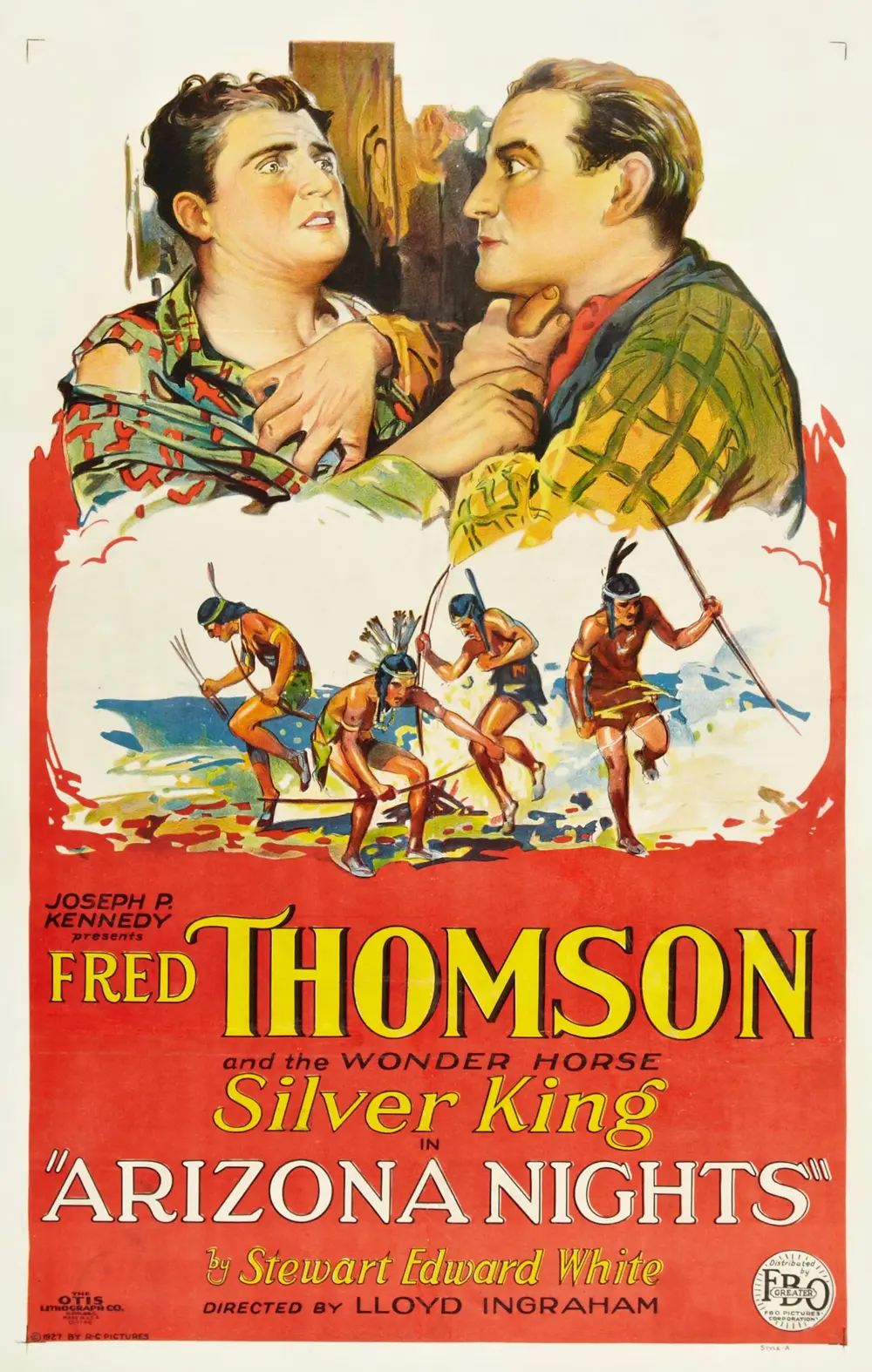
Visualizing the convergence of Lloyd Ingraham's style and the core Western narrative.
Jeff Decker, with the help of Indian leader Red Dog, orchestrates a series of raids on the town of Coldwater, planning to drive the residents out of town and buy up all of their horses, while also starting false rumors of a gold strike outside of town so he can sell phony claims to prospective miners. He hires Fred Coulter, a struggling miner, to buy the horses. Decker also decides that he wants pretty Ruth Browning, whose aunt owns the local eating establishment. Fred learns of Decker's duplicity, and tries to get the miners and townspeople together to fight off an impending Indian attack orchestrated by Decker.
Decades after its release, Arizona Nights remains a vital piece of the cinematic puzzle. Its influence can be seen in countless modern works, solidifying Lloyd Ingraham's status as a master of the craft in United States and beyond.