
DbcultAccessing Vault...
Director's Spotlight
Senior Film Conservator
Director's Spotlight: United States
A Deep Dive into the 1917 Vision of Lloyd Ingraham
As we revisit the 1917 masterpiece Nina, the Flower Girl, we are struck by the atmospheric immersion that Lloyd Ingraham achieves throughout Nina, the Flower Girl. Exploring the nuances of the human condition with cult flair, it solidifies Lloyd Ingraham's reputation as a master of the craft.
In Nina, the Flower Girl, Lloyd Ingraham pushes the boundaries of conventional narrative. The film's unique approach to its subject matter has sparked endless debates and interpretations among cinephiles and critics alike.
To fully appreciate Nina, the Flower Girl, one must consider the cinematic climate of 1917. During this period, United States was undergoing significant artistic shifts, and Lloyd Ingraham was at the forefront of this cult movement, often challenging established norms.
| Cinematography | Noir-Inspired |
| Soundtrack | Synth-Heavy |
| Editing | Rhythmic |
| Art Direction | Naturalist |
Visualizing the convergence of Lloyd Ingraham's style and the core cult narrative.
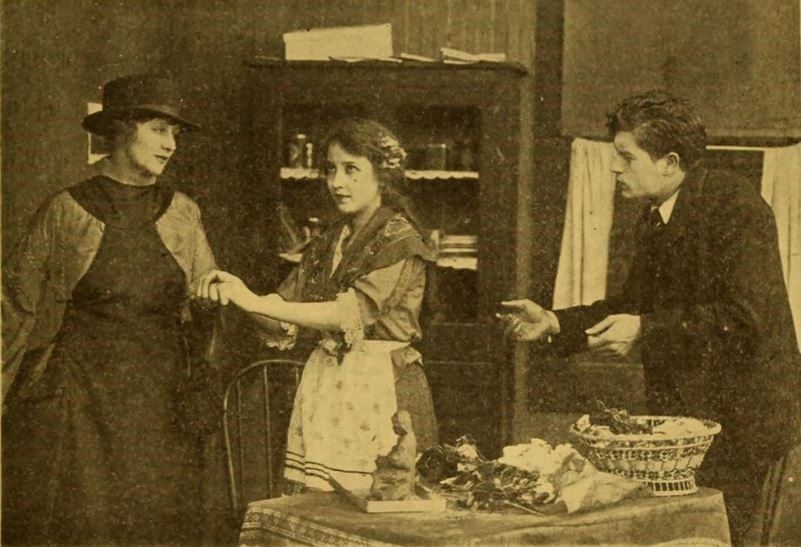
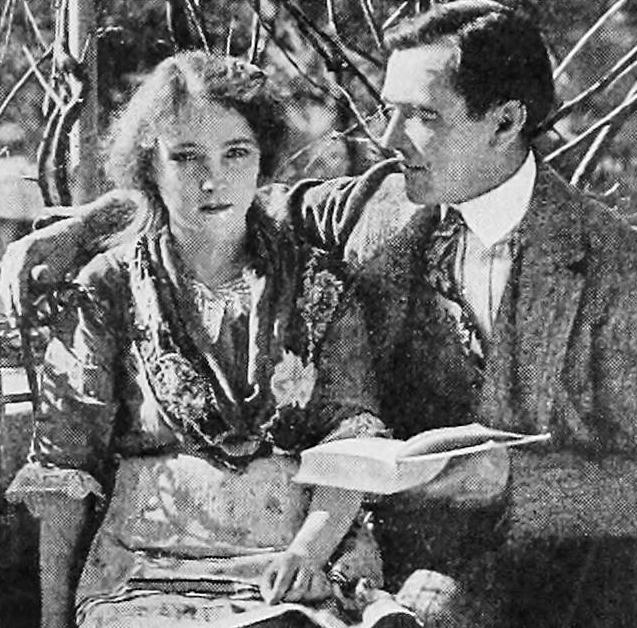
Nina, a blind girl, lives with her grandmother, who has taught her to make artificial flowers, which she sells at a flower-stand. Nina, and Jimmie, a crippled newsboy who sells papers on the same corner, are sweethearts. Nina's grandmother dies, and she turns to Jimmie. One day Jimmie has a fight with another newsboy, whom he thinks is hanging about Nina's stand too much, and the other boy is soon begging for mercy. Miss Fifi Chandler, an artist, happens to be passing, and becoming interested, she accompanies Nina and Jimmie to their rooms, and is surprised to find that Jimmie is an artist, having made a beautiful plaster cast of Nina. Fifi brings Jimmie and his protégé to the notice of her fellow artist, Fred Townsend, who falls in love with Nina. Fred has a great specialist examine Nina's eyes, and assured that an operation would restore her sight, takes her to his mother's home. Townsend tells the boy that the operation will be a success, and is amazed when Jimmie bursts forth in a torrent of words against his fate. Nina will know he is a cripple and not the straight, handsome youth she has pictured. He hurries from the house, and during the ensuing days, when Nina must stay in a darkened room, Jimmie cannot be found. The day comes when the bandages are removed and the operation is a success! That night, in the general hospital, the physician's attention is called to a crippled boy, who had tried to end his life by jumping in the river, but had been rescued. He recognizes Jimmie, hears his story, and a few days later an operation is performed and it becomes evident that he will go forth as straight as Nina's fancy had pictured him. Meantime Nina wonders why Jimmie does not come to see her, as she had not been told about the operation. At last he is brought to her, and Fred Townsend has his reward in watching the happiness of the two youthful lovers.
Decades after its release, Nina, the Flower Girl remains a vital piece of the cinematic puzzle. Its influence can be seen in countless modern works, solidifying Lloyd Ingraham's status as a master of the craft in United States and beyond.